

 TripAdvisor

Daily Hiking Distances of the Inca Trail: Complete 4-Day Trek Guide
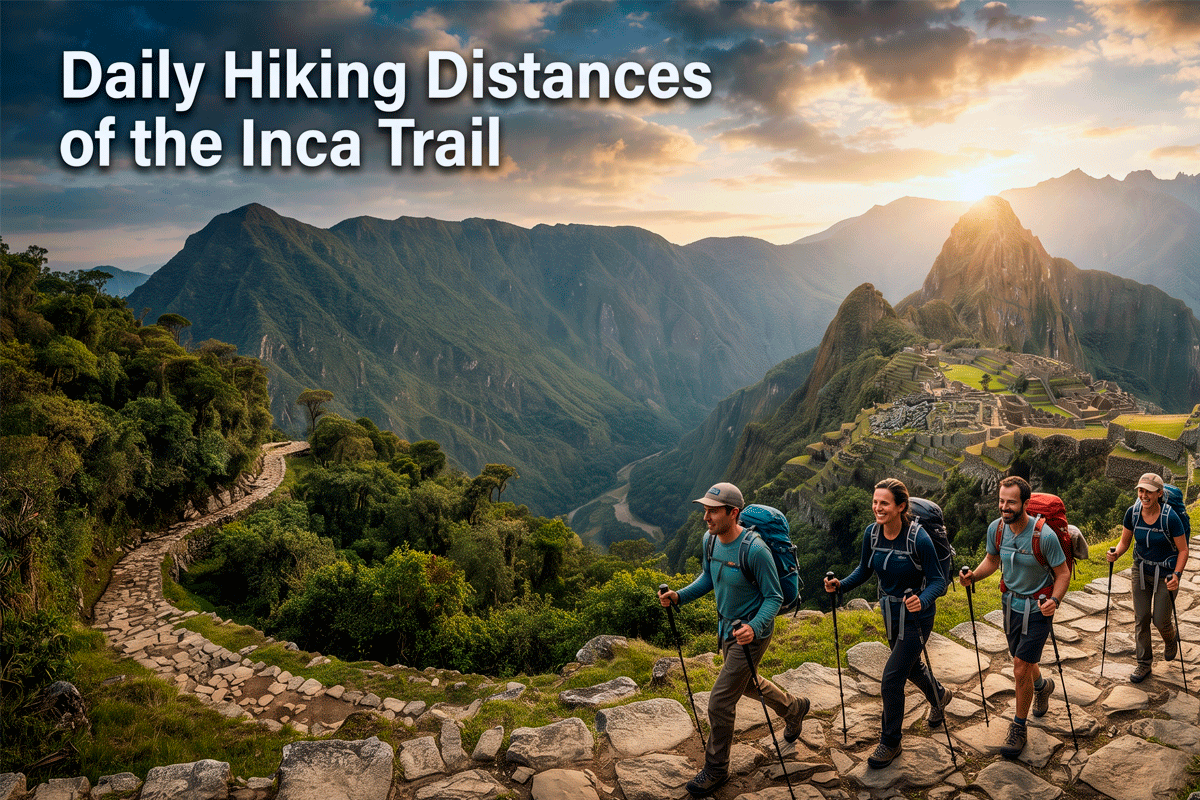
Trekking the Classic Inca Trail to Machu Picchu is a bucket-list journey through high Andean passes, misty cloud forests, and ancient stone ruins. But before you lace up your hiking boots, one question usually looms largest: How far do you actually hike each day?
Understanding the daily hiking distances of the Inca Trail, alongside elevation profile and terrain difficulty, is key to pacing yourself and enjoying every step. The total length of the Classic 4-Day Inca Trail is approximately 26 miles (42 kilometers), but no two days on this ancient pathway are alike.
Whether you are navigating steep stone staircases or descending into lush valleys, here is your breakdown of what to expect on each day of the trail—and how Sunrise Peru Trek ensures a safe, rewarding experience from start to finish.
Classic Inca Trail Day-by-Day Hiking Distances
| Day | Trail Segment | Distance | Estimated Time | Max Altitude | Trail Difficulty |
| Day 1 | Km 82 to Wayllabamba / Ayapata | 7.5 miles (12 km) | 5–6 hours | 10,829 ft (3,300 m) | Moderate |
| Day 2 | Ayapata to Chaquicocha via Dead Woman’s Pass | 10 miles (16 km) | 8–9 hours | 13,828 ft (4,215 m) | Challenging |
| Day 3 | Chaquicocha to Wiñay Wayna | 6 miles (10 km) | 5 hours | 12,000 ft (3,650 m) | Moderate / Scenic |
| Day 4 | Wiñay Wayna to Sun Gate & Machu Picchu | 3.1 miles (5 km) | 2 hours | 8,923 ft (2,720 m) | Easy / Moderate |
Day 1: Km 82 to Ayapata – Gentle Warm-Up & Ancient Ruins
Distance: 7.5 miles (12 km)
Hiking Time: 5 to 6 hours
Max Elevation: 10,829 ft (3,300 m)
Difficulty: Moderate
Your Inca Trail trekking guide meets you early in Cusco or the Sacred Valley to transfer to Kilometer 82, the official trail checkpoint. Day 1 serves as a gentle introduction to hiking to Machu Picchu. The trail meanders alongside the Urubamba River before gradually pitching upward.
- Highlights: First views of the snow-capped Mount Veronica and the ancient agricultural terraces of Llactapata (Patallacta).
- Terrain: Rolling dirt paths, occasional stone steps, and wide valleys.
Day 2: Ayapata to Chaquicocha – Dead Woman’s Pass & Peak Altitude
Distance: 10 miles (16 km)
Hiking Time: 8 to 9 hours
Max Elevation: 13,828 ft (4,215 m)
Difficulty: Challenging
Day 2 is famous for being the most physically demanding stretch of the Inca Trail day by day itinerary. You will conquer the high-altitude pass known as Warmiwañusca (Dead Woman’s Pass), ascending steep Incan stone staircases above the tree line into the alpine puna.
Highlights: Unmatched 360-degree views at the summit of Dead Woman’s Pass, followed by a descent into the Pacaymayu Valley and a secondary climb past the round fortress of Runkurakay.
Terrain: Continuous incline up stone steps, high mountain winds, and steep downhill staircases.
Day 3: Chaquicocha to Wiñay Wayna – Cloud Forests & Incan Masterpieces
Distance: 6 miles (10 km)
Hiking Time: 5 hours
Max Elevation: 12,000 ft (3,650 m)
Difficulty: Moderate / Scenic
Day 3 is widely considered the most captivating leg of the Inca Trail to Machu Picchu. You enter the subtropical cloud forest, navigating stone tunnels hand-carved by the Incas hundreds of years ago.
Highlights: Exploring the dramatic cliffside ruins of Phuyupatamarca (“Town in the Clouds”) and Wiñay Wayna (“Forever Young”), widely regarded as the most impressive site before Machu Picchu itself.
Terrain: Incan paving stones, mossy cloud forest trails, and steep downhills (often referred to as the “gringo killer” steps).
Day 4: Wiñay Wayna to Sun Gate & Machu Picchu – The Grand Arrival
Distance: 3.1 miles (5 km)
Hiking Time: 2 hours
Max Elevation: 8,923 ft (2,720 m) at Inti Punku
Difficulty: Easy to Moderate
An early morning wake-up call brings you to the final leg. You will hike through lush forest toward Inti Punku (The Sun Gate) just as morning light illuminates the stone citadel of Machu Picchu below.
Highlights: Stepping through the Sun Gate for your first iconic panoramic view of Machu Picchu, followed by a comprehensive guided tour of the citadel.
Terrain: Mostly flat narrow dirt trail leading to a short, steep climb up stone steps to the Sun Gate.

Inca Trail Fitness & Preparation Tips
While the total Inca Trail distance (26 miles) may not sound extreme for a 4-day hike, the steep vertical gains and high elevations make physical preparation vital.
Acclimatize in Cusco: Spend at least 2 to 3 days in Cusco (11,152 ft / 3,400 m) or the Sacred Valley before starting your trek to minimize altitude sickness.
Focus on Cardiovascular & Leg Conditioning: Prepare by stair-climbing, hiking on uneven terrain with a loaded backpack, and performing leg-strengthening exercises like lunges and squats.
Break In Your Boots: Wear waterproof, well-broken-in trekking boots with sturdy ankle support to prevent blisters on stone staircases.
Pace Yourself: The Inca Trail is a marathon, not a sprint. Walk at a comfortable rhythm and rely on trekking poles to protect your knees during long descents.
Why Book Your Classic Inca Trail Tour with Sunrise Peru Trek?
Choosing the right guided Inca Trail tour operator transforms a tough mountain hike into an unforgettable, seamless journey. Sunrise Peru Trek is a premier, 100% local operator based in Cusco with decades of experience guiding trekkers safely across the Andes.
Experienced Local Guides: Our professional, fluent English-speaking guides bring Incan history, flora, and fauna to life while prioritizing your safety and well-being.
Small Group Comfort: We keep group sizes small to ensure personalized care, camaraderie, and minimal environmental footprint.
High-Quality Equipment & Hot Meals: Sleep comfortably in warm four-season tents and enjoy fresh, gourmet meals prepared daily by our professional trail chefs.
Responsible & Ethical Tourism: We strictly adhere to fair-wage practices and ethical working conditions for our hardworking porters and trail staff.
Frequently Asked Questions
How many miles is the Inca Trail in total?
The Classic Inca Trail is approximately 26 miles (42 kilometers) long over a 4-day period, ending at the Machu Picchu citadel.
What is the hardest day on the Classic Inca Trail?
Day 2 is widely recognized as the hardest day. Hikers gain nearly 3,800 feet (1,150 meters) of elevation to cross Dead Woman’s Pass at 13,828 feet (4,215 meters) before descending into the valley.
Do I need trekking poles for the Inca Trail?
Yes, trekking poles with rubber tips (required by park regulations) are highly recommended. They significantly reduce strain on your knees during long downhill stone staircases.
How far in advance do I need to book my Inca Trail permit?
Because the Peruvian government strictly limits Inca Trail entries to 500 permits per day (which includes hikers, guides, porters, and cooks), permits sell out fast. We recommend booking your Classic Inca Trail to Machu Picchu at least 5 to 7 months in advance, especially if you plan to travel during the peak dry season (May through September).
What is the best time of year to hike the Inca Trail?
The ideal window for hiking to Machu Picchu is during the dry season, from May to October, when days are typically clear and sunny. June, July, and August offer the crispest weather, though nights at high altitude get cold (near freezing). November and April are great shoulder months with fewer crowds and lush green landscapes.
Note: The entire Inca Trail network is closed every year during the month of February for annual maintenance, environmental recovery, and conservation work.
What happens if I get altitude sickness on the trail?
Our Sunrise Peru Trek guides are certified in wilderness first aid and carry comprehensive first-aid kits, including medical oxygen tanks, at all times. If you feel symptoms like headaches or mild nausea, your guide will adjust your pace, help with hydration, and administer oxygen if necessary. In severe cases, our team manages safe descent protocols.
What do I need to carry in my daypack vs. what the porters carry?
You only need to carry a lightweight daypack (around 20–25 liters) with your daily essentials:
Rain gear, warm layer, and sunscreen
Refillable water bottle or bladder
Passport, camera, personal snacks, and trekking poles
Our hardworking porter team carries the remaining heavy gear—including tents, sleeping bags, sleeping pads, cooking equipment, and up to 6–7 kg (13–15 lbs) of your personal belongings in a duffel bag provided by Sunrise Peru Trek.
Are there bathroom facilities and showers along the Inca Trail?
Yes, basic toilet facilities are available at each major campsite and designated points along the trail. Sunrise Peru Trek also provides clean, private chemical toilet tents exclusively for our group at every lunch stop and campsite. While basic cold showers exist at a couple of campsites, most trekkers rely on warm water basins and wet wipes provided daily by our team to freshen up.
What kind of food is served on the trek?
You will be amazed by what our professional trail chefs prepare in a mountain kitchen! Meals are served hot in a spacious dining tent and include a balanced mix of local Peruvian delicacies and international dishes. We serve hearty soups, fresh vegetables, chicken, fish, quinoa, fruits, and hot tea or coffee before every leg. We easily accommodate vegetarian, vegan, gluten-free, and other dietary requirements—just let us know when booking!
Ready to Conquer the Inca Trail?
Ready to conquer the legendary Inca Trail? Join Sunrise Peru Trek for an unforgettable 4-day journey to Machu Picchu with expert local guides, premium camping service, and guaranteed Inca Trail permits.
YOUR INCA TRAIL ADVENTURE STARTS WITH A PERMIT
2027 permits are now available. Inca Trail permits are limited, and popular trekking dates can sell out months in advance.
Don’t wait until your preferred date is gone.
SECURE YOUR INCA TRAIL PERMIT →
Plan early. Trek the Inca Trail. Arrive at Machu Picchu through the Sun Gate.
Sunrise Peru Trek Travel & Tours offers safe, fast, and reliable payment methods to make booking your dream trip to Machu Picchu and Cusco simple and stress-free. We prioritize your security and convenience, so you can focus on planning your adventure with confidence. We accept PayPal, one of the world’s most trusted online payment platforms. Paying with PayPal is quick, secure, and easy, allowing you to book your tour in just a few clicks from anywhere in the world. Your financial information is protected with advanced encryption, giving you complete peace of mind.Secure Payment
Secure Payment Methods for Your Peru Tours
Easy & Secure Payments
Easy & Secure Payments with PayPal
