

 TripAdvisor
Inca Trail Altitude Guide: Everything You Need to Know Before You Hike
The Inca Trail is more than a hike—it’s one of the world’s greatest adventures. Every stone path, cloud forest, and mountain pass brings you closer to the breathtaking citadel of Machu Picchu. However, one factor every traveler should understand before setting out is altitude. Knowing how the elevation changes along the trail can make the difference between simply completing the trek and truly enjoying every unforgettable moment.
This Inca Trail Altitude Guide explains everything you need to know about the trail’s elevation, altitude sickness prevention, acclimatization, and how to prepare for a safe and rewarding journey.
Understanding the Inca Trail Altitude
The Classic 4-Day Inca Trail takes hikers through spectacular Andean landscapes ranging from lush valleys to alpine mountain passes. While the trek is considered moderate to challenging, thousands of first-time hikers complete it every year with proper preparation.
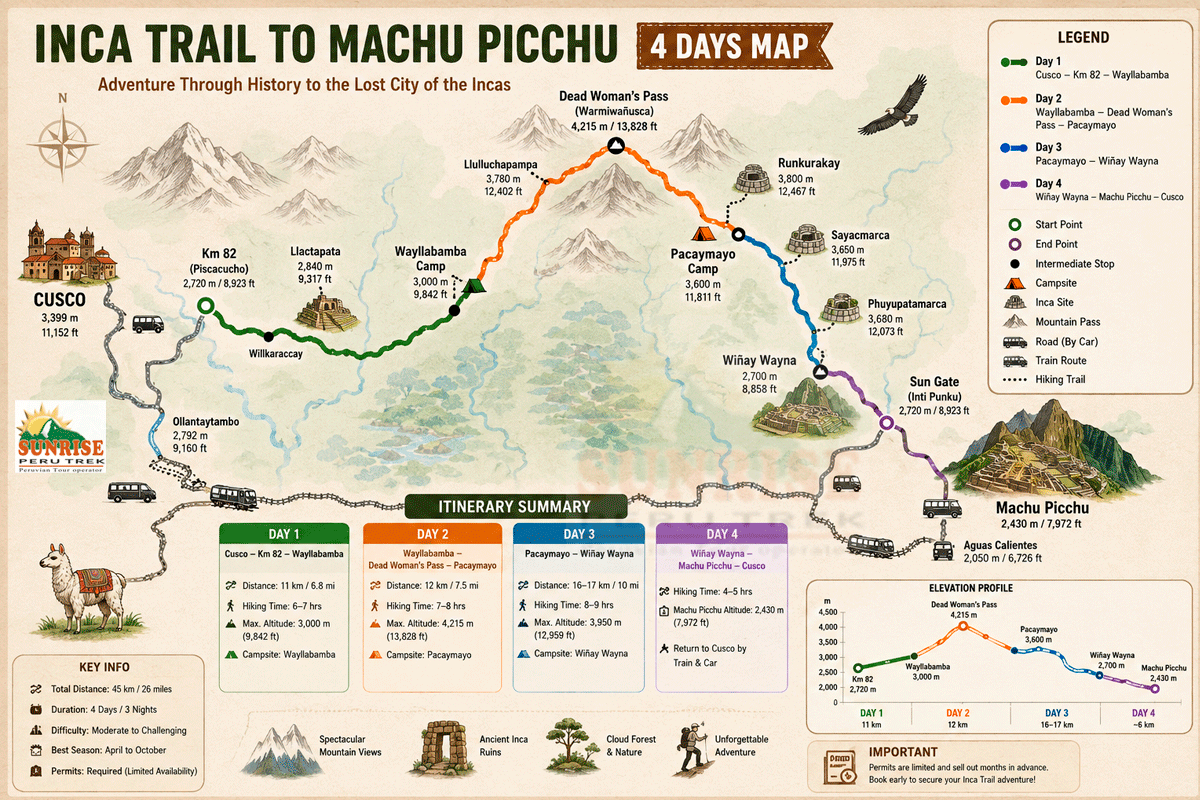
Here is the approximate altitude profile:
| Location | Elevation |
| Cusco | 3,399 m (11,152 ft) |
| Km 82 (Trailhead) | 2,720 m (8,923 ft) |
| Wayllabamba | 3,000 m (9,843 ft) |
| Dead Woman’s Pass (Warmiwañusca) | 4,215 m (13,828 ft) |
| Pacaymayo | 3,600 m (11,811 ft) |
| Phuyupatamarca | 3,680 m (12,073 ft) |
| Wiñay Wayna | 2,650 m (8,694 ft) |
| Machu Picchu | 2,430 m (7,972 ft) |
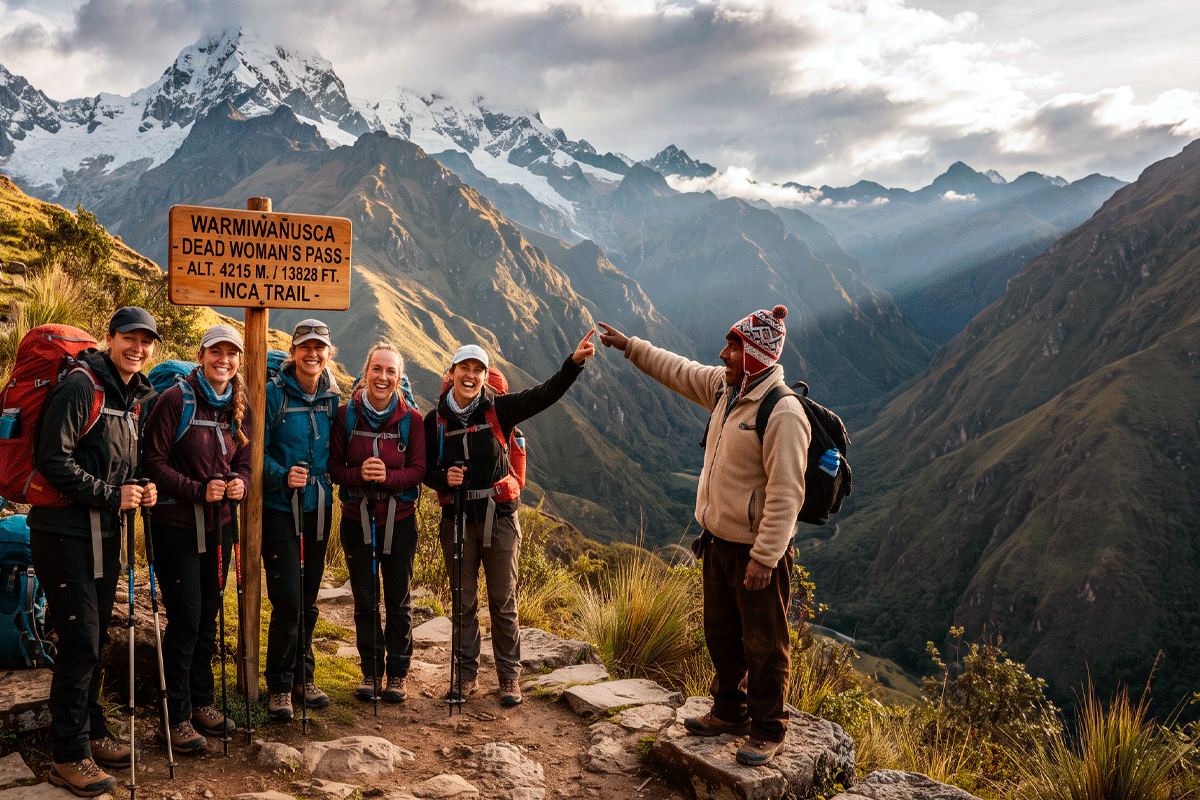
The highest point of the trek is Dead Woman’s Pass, where hikers are rewarded with panoramic views of the Andes after conquering the most demanding climb of the journey.
Why Does Altitude Matter?
At higher elevations, the air contains less oxygen. Your body must work harder to breathe efficiently, especially during physical activity. This adjustment period is completely normal and varies from person to person.
Fortunately, most travelers who spend a couple of days acclimatizing in Cusco before the trek experience little or no difficulty.
Understanding your body’s response to altitude is the first step toward enjoying the adventure with confidence.
Symptoms of Altitude Sickness
Altitude sickness, also known as Acute Mountain Sickness (AMS), is usually mild and temporary.
Common symptoms include:
- Mild headache
- Shortness of breath during exertion
- Fatigue
- Dizziness
- Nausea
- Loss of appetite
- Difficulty sleeping
These symptoms often improve with rest, hydration, and proper acclimatization. Experienced guides continuously monitor hikers throughout the trek and know how to respond if someone feels unwell.
How to Prevent Altitude Sickness
Preparing properly before your trek dramatically reduces the risk of altitude-related discomfort.
Arrive in Cusco Early
Spend at least 2–3 days in Cusco before beginning the Inca Trail. This allows your body to gradually adapt to the elevation.
Stay Hydrated
Drink plenty of water throughout your stay and during the trek. Hydration helps your body function efficiently at altitude.
Eat Light Meals
Choose nutritious foods rich in carbohydrates while avoiding heavy meals during the first days in Cusco.
Walk at Your Own Pace
The Inca Trail is not a race. Slow, steady hiking allows your body to adapt naturally while conserving energy for the challenging sections.
Avoid Alcohol Before the Trek
Alcohol can increase dehydration and make acclimatization more difficult.
Consider Coca Tea
Many visitors enjoy traditional coca tea, a centuries-old Andean remedy commonly used to help ease mild altitude discomfort.
What to Pack for High-Altitude Hiking
Packing wisely will help you stay comfortable throughout the trek.
Essential items include:
- Lightweight layered clothing
- Waterproof jacket
- Warm fleece or insulated jacket
- Hiking boots with good grip
- Sun hat
- Sunglasses with UV protection
- Sunscreen (SPF 50+)
- Reusable water bottle or hydration system
- Trekking poles (recommended)
- Personal medications
- Lip balm
- Small first aid kit
- High-energy snacks
Mountain weather can change quickly, so dressing in layers allows you to stay comfortable throughout the day.
Best Time to Hike the Inca Trail
The Inca Trail is open most of the year except February, when it closes for conservation and maintenance.
The best months to hike are:
- April
- May
- June
- September
- October
These months generally offer dry weather, clear mountain views, and ideal hiking conditions.
Because permits are limited by the Peruvian government, they often sell out several months in advance, especially during peak season.
Why Travel with Sunrise Peru Trek?
Choosing an experienced local operator can make your adventure safer, more enjoyable, and stress-free.
At Sunrise Peru Trek, our passionate local guides have years of experience leading travelers across the Inca Trail. They understand the effects of altitude, monitor each hiker’s well-being, and provide expert guidance every step of the way.
Our tours include:
- Licensed professional guides
- Small groups for a personalized experience
- Comprehensive safety procedures
- High-quality camping equipment
- Delicious freshly prepared meals
- Reliable logistics and permit management
- Friendly local support from beginning to end
As a locally owned company, we are committed to responsible tourism while helping travelers experience Peru’s incredible cultural and natural heritage with confidence.
Your Adventure Starts Above the Clouds
Reaching Dead Woman’s Pass is more than conquering the highest point of the Inca Trail—it’s an achievement you’ll remember for the rest of your life. Every climb rewards you with spectacular landscapes, ancient Inca engineering, and an unforgettable sense of accomplishment before you finally arrive at the majestic Machu Picchu through the Sun Gate.
With proper preparation, acclimatization, and the support of experienced guides, hikers of many fitness levels successfully complete this iconic journey every year.
Ready to experience one of the world’s greatest treks? Reserve your Inca Trail adventure with Sunrise Peru Trek today. Our expert local team will handle every detail, so you can focus on enjoying the adventure of a lifetime. Book early—Inca Trail permits are limited and often sell out months in advance.
Frequently Asked Questions (FAQs)
1. How high is the Inca Trail?
The Classic Inca Trail ranges from approximately 2,430 m (7,972 ft) at Machu Picchu to its highest point at Dead Woman’s Pass (Warmiwañusca), 4,215 m (13,828 ft). This significant elevation gain is one of the reasons hikers should prepare properly before the trek.
2. What is the highest point on the Inca Trail?
The highest point is Dead Woman’s Pass (Warmiwañusca Pass) at 4,215 meters (13,828 feet) above sea level. It is reached on the second day of the Classic 4-Day Inca Trail and rewards hikers with spectacular panoramic views of the Andes.
3. Is the Inca Trail difficult because of the altitude?
Altitude is one of the biggest challenges on the Inca Trail, but most hikers complete the trek successfully with proper acclimatization, hydration, and a steady hiking pace. Physical preparation also makes the experience much more enjoyable.
4. Can beginners hike the Inca Trail?
Yes. Many first-time trekkers successfully complete the Inca Trail every year. While a reasonable level of fitness is recommended, proper preparation and the support of experienced guides make the trek achievable for most healthy travelers.
5. How can I avoid altitude sickness on the Inca Trail?
The best way to reduce the risk is to spend 2–3 days in Cusco before your trek, drink plenty of water, avoid excessive alcohol, eat light meals, and hike at a comfortable pace. Listening to your guide’s advice is also essential.
6. What are the symptoms of altitude sickness?
Common symptoms include headache, dizziness, fatigue, nausea, shortness of breath during exercise, loss of appetite, and difficulty sleeping. Most cases are mild and improve with rest and hydration.
7. Is oxygen available during the Inca Trail trek?
Professional tour operators like Sunrise Peru Trek carry emergency oxygen and first-aid equipment as part of their safety protocols. Experienced guides are trained to recognize altitude-related symptoms and assist hikers if necessary.
8. What is the altitude of Cusco?
Cusco sits at approximately 3,399 meters (11,152 feet) above sea level. Spending a few days here before beginning the trek helps your body adjust to the elevation.
9. What should I pack for high-altitude trekking?
Pack lightweight layers, a waterproof jacket, warm clothing, sturdy hiking boots, sunscreen, sunglasses, a hat, reusable water bottles, trekking poles, personal medications, snacks, and a small first-aid kit.
10. When is the best time to hike the Inca Trail?
The best months are generally April, May, June, September, and October, when the weather is usually dry and the mountain views are at their clearest. The trail is closed every February for annual maintenance and conservation.
11. Do I need to train before hiking the Inca Trail?
Yes. Walking, hiking, jogging, cycling, or climbing stairs several weeks before your trip will improve your endurance and make the trek more comfortable. Strengthening your legs and cardiovascular fitness is highly recommended.
12. How far in advance should I book the Inca Trail?
Because the Peruvian government limits the number of daily permits, booking 4 to 6 months in advance is recommended. During peak season (May through September), permits often sell out even earlier.
13. Is the Inca Trail safe?
Yes. The Inca Trail is considered safe when hiking with a licensed tour operator. Experienced guides monitor weather conditions, assist with altitude adaptation, carry emergency equipment, and ensure hikers follow safe trekking practices throughout the journey.
14. Is the Inca Trail worth it?
Absolutely. The Inca Trail is consistently ranked among the world’s greatest hikes. Along the way, you’ll discover ancient Inca ruins, breathtaking mountain scenery, cloud forests, and the unforgettable experience of entering Machu Picchu through the Sun Gate.
15. Why choose Sunrise Peru Trek for the Inca Trail?
Sunrise Peru Trek is a locally owned operator with experienced professional guides, small group sizes, outstanding customer service, quality camping equipment, delicious meals, and a strong commitment to safety and sustainable tourism. Booking with a trusted local company ensures a memorable and worry-free adventure.
YOUR INCA TRAIL ADVENTURE STARTS WITH A PERMIT
2027 permits are now available. Inca Trail permits are limited, and popular trekking dates can sell out months in advance.
Don’t wait until your preferred date is gone.
SECURE YOUR INCA TRAIL PERMIT →
Plan early. Trek the Inca Trail. Arrive at Machu Picchu through the Sun Gate.
Sunrise Peru Trek Travel & Tours offers safe, fast, and reliable payment methods to make booking your dream trip to Machu Picchu and Cusco simple and stress-free. We prioritize your security and convenience, so you can focus on planning your adventure with confidence. We accept PayPal, one of the world’s most trusted online payment platforms. Paying with PayPal is quick, secure, and easy, allowing you to book your tour in just a few clicks from anywhere in the world. Your financial information is protected with advanced encryption, giving you complete peace of mind.Secure Payment
Secure Payment Methods for Your Peru Tours
Easy & Secure Payments
Easy & Secure Payments with PayPal
