

 TripAdvisor

Inca Trail Porter Regulations: Supporting the Heart of Your Journey
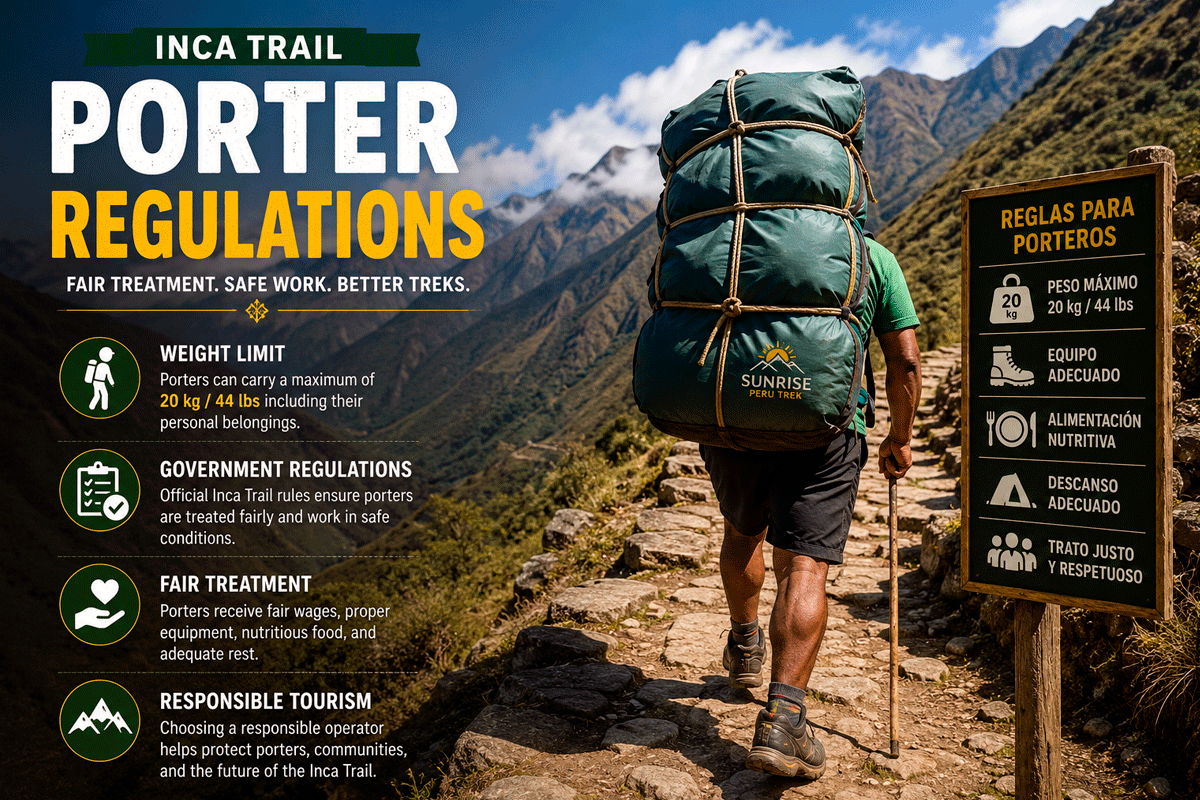
Lacing up your boots for the Classic Inca Trail is one of the most thrilling steps an adventurer can take. As you wind through high-mountain passes, cloud forests, and ancient stone ruins toward Machu Picchu, you will quickly realize something profound: the real magic of this world-famous trek doesn’t just lie in the scenery. It lies in the incredible team carrying your journey on their shoulders.
Known locally as Quechua runners or chasquis, the porters are the true backbone of every Machu Picchu trek. Long before sunrise, they are up preparing hot tea, pitching camp, and moving mountains of gear so you can focus on making memories.
However, behind their warm smiles and extraordinary endurance lies a history of hard work that requires strict protection. Understanding Inca Trail porter regulations isn’t just a technical detail—it’s an essential part of being a responsible, conscious traveler in Peru.
Why Porter Regulations Matter on the Inca Trail
For decades, the demand for Inca Trail permits brought thousands of hikers to Cusco each year. In the past, lack of clear legislation meant porters were frequently vulnerable to exploitation—carrying unsafe, excessive loads without proper clothing, fair wages, or decent sleeping conditions.
To build a sustainable future for ethical trekking in Peru, the Peruvian government, alongside porter labor unions, introduced comprehensive laws (such as Ley del Porteador N° 31614).
These regulations exist to achieve three vital goals:
Protect Workers’ Rights: Guaranteeing fair pay, insurance, proper rest, and dignity for native Quechua communities.
Ensure Safe Working Conditions: Preventing chronic health issues and physical injuries caused by overexertion.
Preserve the Trail: Managing weight and human impact along fragile mountain paths to protect the trail for generations to come.
When porters are respected and cared for, your entire trekking experience elevates from a simple vacation to a deeply meaningful cultural connection.
Official Porter Weight Limits & Enforcement
One of the most critical aspects of Inca Trail rules involves strict weight enforcement.
+-------------------------------------------------------------------+
|               OFFICIAL INCA TRAIL PORTER WEIGHT LIMITS            |
+-------------------------------------------------------------------+
|  Maximum Total Load Allowed:  20 kg (44 lbs) per porter           |
|  Personal Gear Allowance:    5 kg (11 lbs) reserved for porter   |
|  Net Carrying Capacity:       15 kg (33 lbs) max camp gear/duffels|
+-------------------------------------------------------------------+
Checkpoints and Inspections
At the entrance of the trail (Km 82) and at various weigh stations along the route, park rangers strictly weigh every porter’s pack. If an operator’s pack exceeds the maximum load limit, the company faces severe fines, and the excess gear must be redistributed immediately before continuing.
Personal Porter Services for Hikers
When you book with Sunrise Peru Trek, we include personal porter allowances or options to hire a dedicated duffel porter. This means a designated porter transports your sleeping bag, extra clothes, and heavy gear (typically up to 7 kg per hiker inside a provided duffel bag). By sticking strictly to official limits, we ensure your personal comfort never comes at the expense of someone else’s well-being.
What Porters Carry vs. What Travelers Carry
Have you ever wondered how a comfortable campsite magically appears in the middle of the remote Andes? It’s all thanks to meticulous organization and porter teamwork.
What Porters Carry
Porters divide the campsite weight efficiently to keep loads balanced and safe:
Heavy-duty sleeping tents and dining tents
Camp kitchen equipment, gas stoves, and fresh ingredients
Tables, chairs, and dining utensils
Clean water filtration systems and emergency oxygen tanks
Hikers’ personal duffel bags (kept strictly within allowed weight limits)
What Travelers Carry
Because your heavy duffel travels ahead with the porter team, you only need to carry a small, light daypack containing your daily essentials:
Your Daypack Checklist:
1.5–2 liters of water (in a refillable hydration bladder or bottle)
High-energy snacks and personal medication
Lightweight rain jacket or poncho and fleece layer
Camera, phone, and power bank
Passport, cash for tipping, and sun protection (hat, sunscreen, sunglasses)
Responsible Tourism: Why Your Choice of Tour Operator Matters
Not all trekking companies operate under the same standards. While all companies must follow basic governmental Inca Trail porter regulations, ethical tour operators choose to go far beyond the legal minimums.
When you book with Sunrise Peru Trek, you directly support a culture of respect, dignity, and fair practice.
Here is how Sunrise Peru Trek leads the way in responsible tourism in Peru:
Fair & Prompt Wages: We pay our porters above-average industry wages, ensuring fair compensation for their hard work.
Proper Gear & Warm Clothing: We provide high-quality backpacks, thermal wear, sturdy footwear, and rain protection for every team member.
Nutritious Meals: Our porters eat the same wholesome, high-calorie meals prepared by our professional trekking chefs—never leftovers or inadequate rations.
Comfortable Sleeping Quarters: We supply dedicated, warm tents and thick sleeping pads specifically for our porter crew.
Safety & Insurance: Full medical insurance and safety coverage are provided for every staff member on the trail.
Local Community Impact: We hire directly from local high-Andean Quechua communities, ensuring tourism dollars directly benefit rural families.
With over two decades of experience operating small-group treks, Sunrise Peru Trek combines exceptional customer satisfaction with high ethical standards.
6 Practical Tips for Ethical Trekkers
Want to make a positive impact on your Classic Inca Trail adventure? Follow these simple packing and trekking tips:
Respect Your Duffel Weight Limit: Stick precisely to the weight allowance provided by your agency (usually 5 to 7 kg). Overpacking directly impacts your porter’s back.
Pack Smart and Light: Leave heavy hard-cover books, bulky jeans, or unnecessary electronics at your hotel in Cusco.
Tip Generously: Tipping is a traditional way to show gratitude. Pool tips with your fellow group members at the final dinner to thank the porters and chef directly.
Learn a Few Quechua Words: A simple “Añay” (thank you) or “Allianllachu” (how are you?) creates instant warmth and connection.
Yield the Trail: When you hear porters approaching behind you on steep uphills or downhills, step safely to the mountain side of the trail and let them pass.
Say No to Unusually Cheap Tours: Operating an ethical, fully-supported trek requires fair wages and quality equipment. Dirt-cheap operators often cut costs by compromising porter welfare.
Experience the Inca Trail the Right Way with Sunrise Peru Trek
Hiking the Inca Trail to Machu Picchu is a bucket-list achievement. When you stand at the Sun Gate (Inti Punku) and watch the morning mist rise over the ancient citadel, the triumph you feel will be shared by the incredible team who helped you get there.
Choosing an ethical company ensures that your trek leaves a positive legacy in the Andes. With small groups, experienced local guides, delicious chef-prepared meals, top-tier camping gear, and an unyielding commitment to porter dignity, Sunrise Peru Trek turns your dream journey into an authentic, life-changing reality.
Ready to step onto the sacred path of the Incas?
Book Your Classic Inca Trail Trek with Sunrise Peru Trek Today!
Frequently Asked Questions (FAQ)
1. How much weight are porters legally allowed to carry on the Inca Trail?
According to Peruvian government regulations, the absolute maximum load a porter can carry is 20 kg (44 lbs). This includes 5 kg reserved exclusively for their personal belongings (sleeping bag, clothing, and food), leaving a maximum of 15 kg for company equipment and hiker duffel bags.
2. How are porter weight limits enforced on the trail?
Weight limits are enforced at official governmental checkpoints located along the Inca Trail, starting at Km 82. Park rangers weigh every single porter pack. If a pack is overweight, the trekking agency is heavily fined, and gear must be redistributed before the crew can proceed.
3. Should I hire an extra porter for my Inca Trail trek?
Yes, hiring a personal porter (or choosing a tour package that includes duffel porter service) is highly recommended. It allows you to hike comfortably with just a lightweight daypack containing your water, jacket, and daily essentials, vastly improving your overall trek experience while providing vital employment for local Quechua communities.
4. How much should I tip porters on the Inca Trail?
Tipping is customary and greatly appreciated. Groups typically pool their money together at the end of the third day. A standard tip is usually around 150 to 200 Peruvian Soles ($40–$55 USD) per hiker, which is then fairly distributed among the porters, camp cooks, and helpers.
5. Why is booking an ethical tour operator so important for porter welfare?
Ethical operators ensure porters receive fair wages, nutritious food, comfortable sleeping quarters, proper footwear, safety equipment, and medical insurance. Choosing a responsible operator like Sunrise Peru Trek guarantees that your adventure supports local indigenous communities without exploiting workers.
INQUIRY NOW THIS TRIP
Thank you, .
We have received your message. Our team will review it and contact you shortly.
YOUR INCA TRAIL ADVENTURE STARTS WITH A PERMIT
2027 permits are now available. Inca Trail permits are limited, and popular trekking dates can sell out months in advance.
Don’t wait until your preferred date is gone.
SECURE YOUR INCA TRAIL PERMIT →
Plan early. Trek the Inca Trail. Arrive at Machu Picchu through the Sun Gate.


Sunrise Peru Trek Travel & Tours offers safe, fast, and reliable payment methods to make booking your dream trip to Machu Picchu and Cusco simple and stress-free. We prioritize your security and convenience, so you can focus on planning your adventure with confidence. We accept PayPal, one of the world’s most trusted online payment platforms. Paying with PayPal is quick, secure, and easy, allowing you to book your tour in just a few clicks from anywhere in the world. Your financial information is protected with advanced encryption, giving you complete peace of mind.Secure Payment
Secure Payment Methods for Your Peru Tours
Easy & Secure Payments
Easy & Secure Payments with PayPal
