

 TripAdvisor
How to Prepare for High-Altitude Trekking
Will I be able to handle the altitude?
It is one of the first questions many travelers ask before hiking the Andes. And it is a reasonable one.
High-altitude trekking differs from hiking at sea level because oxygen decreases as elevation increases. Your body needs time to adapt, which is why a trek can feel more demanding even when you are physically fit.
The good news? The mountains are challenging—but preparation can make the experience far more enjoyable.
If you are planning the Inca Trail to Machu Picchu, here is how to prepare for high-altitude trekking with greater confidence.
1. Understand Altitude Before You Trek
Altitude begins to matter as you climb higher, and the effects vary from person to person. Some travelers adapt quickly, while others may experience symptoms even when they are physically strong.
Fitness is important, but it does not guarantee protection against altitude illness. Training prepares your body for the physical demands of trekking; acclimatization helps your body adapt to reduced oxygen.
That distinction is essential when preparing for the Inca Trail.
2. Give Your Body Time to Acclimatize
One of the most important high-altitude trekking tips is simple: don’t rush your ascent.
Spending time at altitude before starting a demanding trek allows your body to adapt. Travelers arriving from low elevations should avoid going too high, too fast, and should take their first days at altitude more slowly.
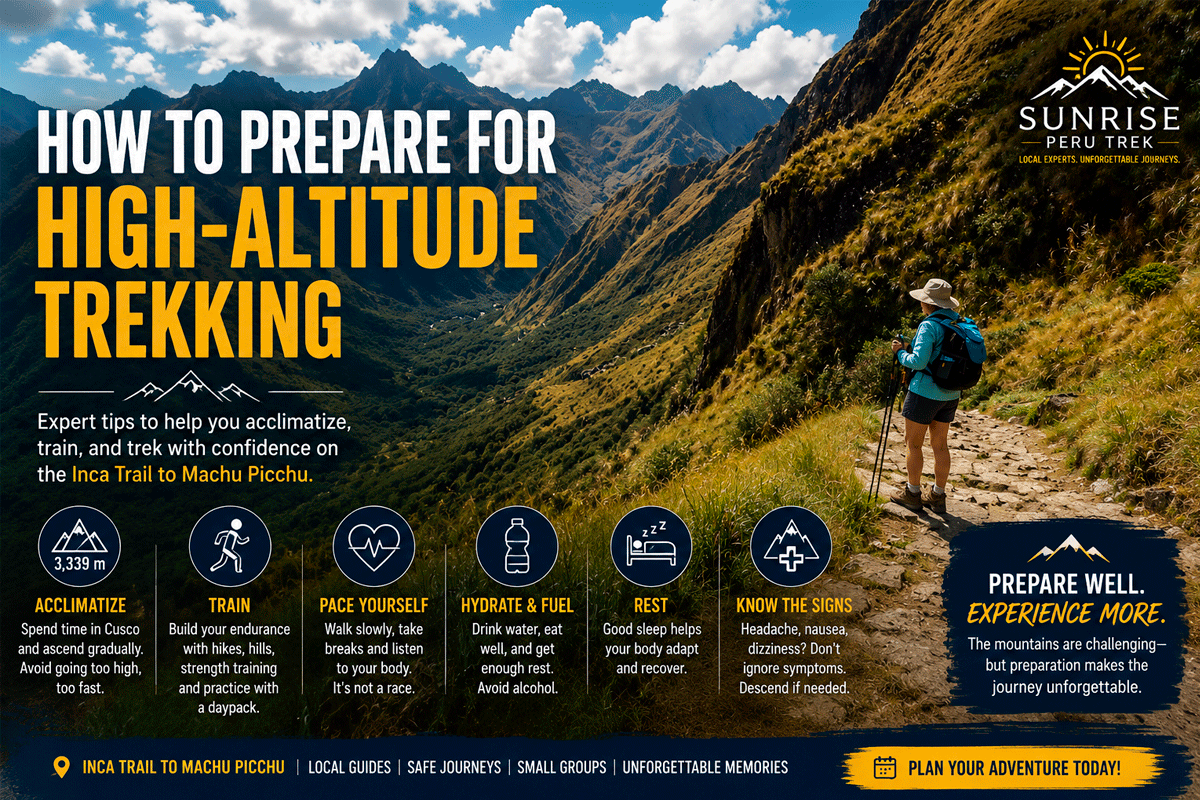
For example, Cusco sits at approximately 3,339 meters (10,955 feet) above sea level, so arriving and immediately attempting a strenuous trek is not ideal for many travelers.
The CDC recommends gradual ascent and avoiding a rapid jump from low elevation to high sleeping altitude. Above 3,000 meters, it recommends increasing sleeping altitude by no more than about 500 meters per day, with additional acclimatization time as elevation increases.
Your itinerary matters. Follow the recommendations of experienced local trekking professionals and allow your body time to adjust.
Book the 4-day Inca Trail Trek
3. Train Your Body for the Trek
You don’t need to be an elite athlete to hike the Inca Trail, but preparation makes a significant difference.
Before your trip, build your endurance gradually with:
- Regular walking and hiking
- Hills, stairs, or incline training
- Cardiovascular exercise
- Leg and core strengthening
- Longer weekend hikes
- Practice carrying a daypack
- Gradually increasing distance and elevation
Think of training as preparation for the trail itself.
Your muscles and cardiovascular system need to handle steep steps, long descents, and hours of walking. Acclimatization, meanwhile, prepares your body for the altitude.
Train for the trek—and give yourself time to acclimatize to the altitude.
4. Walk Slowly and Find Your Rhythm
High-altitude trekking is not a race.
A steady pace is often more comfortable than starting fast and exhausting yourself early. Take short breaks when necessary, breathe naturally, and listen to your body.
Most importantly, don’t compare your pace with another traveler. People respond differently to altitude.
On the Inca Trail, the goal is not to be the fastest hiker—it is to enjoy the journey to Machu Picchu.
5. Hydration, Food & Rest Matter
Your body works hard at altitude, so basic habits become especially important.
Drink regularly without forcing excessive amounts of water. Eat enough to maintain your energy, choose balanced meals and snacks, and prioritize good sleep.
The CDC also recommends avoiding alcohol during the initial period at altitude and limiting strenuous exercise during the first 48 hours after arriving at high elevation.
There is no magic food or drink that guarantees protection from altitude illness. Good preparation comes from a combination of acclimatization, sensible pacing, nutrition, hydration, rest, and knowing when to slow down.
6. Know the Warning Signs of Altitude Illness
Recognizing symptoms early is an important part of altitude sickness prevention.
Common symptoms of acute mountain sickness can include:
- Headache
- Fatigue
- Dizziness
- Loss of appetite
- Nausea
- Vomiting
These symptoms can develop after arriving at altitude or after ascending higher.
Do not continue ascending if you develop symptoms of altitude illness. If symptoms worsen despite resting at the same elevation, descent is important, and medical attention may be necessary. Severe symptoms such as difficulty breathing at rest, confusion, or problems with coordination require urgent attention.
If you have a medical condition or concerns about traveling to high altitude, speak with a qualified healthcare professional before your trip.
How Do You Prepare Your Body for High-Altitude Trekking?
To prepare for high-altitude trekking, combine regular hiking and cardiovascular training with leg and core strengthening. Practice walking with a daypack, increase your hiking distance gradually, and allow enough time to acclimatize before strenuous activity. Start slowly, stay nourished and hydrated, sleep well, and pay attention to symptoms rather than pushing through them.
Before Your High-Altitude Trek: Quick Checklist
✓ Acclimatize properly
✓ Train with hills, stairs, or hikes
✓ Build leg and cardiovascular strength
✓ Practice hiking with a daypack
✓ Increase hiking distance gradually
✓ Sleep well
✓ Eat properly
✓ Stay hydrated
✓ Pack appropriate layers and sun protection
✓ Start slowly
✓ Listen to your body
Preparing for the Inca Trail to Machu Picchu
The Classic Inca Trail is much more than a walk through the mountains. The route combines high mountain passes, steep ascents and descents, ancient Inca stone pathways, cloud forest, archaeological sites, changing weather, and high-altitude environments.
That combination is what makes the trek so rewarding—and why Inca Trail preparation matters.
With the right preparation, you can spend less time worrying about whether you are ready and more time appreciating the stone pathways, mountain scenery, ancient ruins, and the anticipation of reaching Machu Picchu.
If you are still researching, our Inca Trail altitude guide, Inca Trail packing list, and Inca Trail training guide can help you prepare step by step.
Ready to Experience the Inca Trail?
You don’t have to prepare for the Andes alone.
At Sunrise Peru Trek, our local team understands the conditions travelers encounter while trekking in Peru. From experienced local guides and carefully organized logistics to personalized support and small-group or private trekking options, we help you focus on the experience while our team takes care of the details.
You can do this. And Machu Picchu is waiting.
Explore our Classic 4-Day Inca Trail to Machu Picchu and start preparing for one of the Andes’ most iconic trekking experiences with Sunrise Peru Trek.
This article provides general travel information and is not a substitute for professional medical advice.
YOUR INCA TRAIL ADVENTURE STARTS WITH A PERMIT
2027 permits are now available. Inca Trail permits are limited, and popular trekking dates can sell out months in advance.
Don’t wait until your preferred date is gone.
SECURE YOUR INCA TRAIL PERMIT →
Plan early. Trek the Inca Trail. Arrive at Machu Picchu through the Sun Gate.

Sunrise Peru Trek Travel & Tours offers safe, fast, and reliable payment methods to make booking your dream trip to Machu Picchu and Cusco simple and stress-free. We prioritize your security and convenience, so you can focus on planning your adventure with confidence. We accept PayPal, one of the world’s most trusted online payment platforms. Paying with PayPal is quick, secure, and easy, allowing you to book your tour in just a few clicks from anywhere in the world. Your financial information is protected with advanced encryption, giving you complete peace of mind.Secure Payment
Secure Payment Methods for Your Peru Tours
Easy & Secure Payments
Easy & Secure Payments with PayPal
