

 TripAdvisor

Peru Safety Guide: Is Peru Safe for Travelers in 2026?
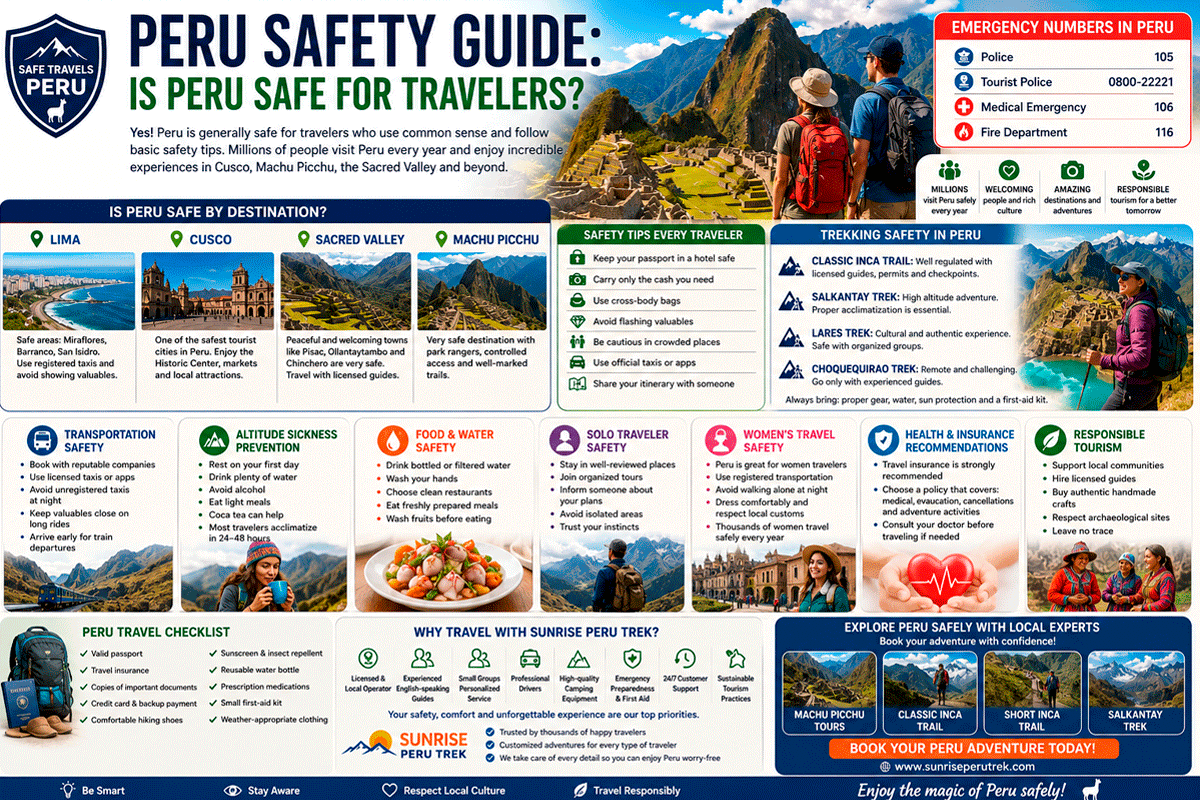
Yes. Peru is generally safe for travelers who use common sense and choose reputable tour operators. Popular destinations such as Cusco, the Sacred Valley, and Machu Picchu welcome millions of visitors every year. Following basic Peru travel safety tips and booking with licensed local experts helps ensure a safe and unforgettable adventure.
Peru Safety Guide: Is Peru Safe for Travelers in 2026?
Peru continues to be one of South America’s most exciting travel destinations, attracting millions of visitors every year. From the breathtaking citadel of Machu Picchu to the colorful streets of Cusco and the spectacular Andes Mountains, Peru offers unforgettable adventures for every type of traveler.
The short answer is yes—Peru is safe to visit in 2026 for travelers who plan, stay informed, and use reputable transportation and tour operators. Like any popular tourist destination, being aware of your surroundings and following basic safety precautions will help you enjoy a worry-free vacation.
Whether you’re planning your first trip to Peru or returning for another adventure, this Peru Safety Guide covers everything you need to know.
Why Millions of Tourists Safely Visit Peru Every Year
Peru welcomes millions of international travelers annually who come to experience its rich history, vibrant culture, incredible cuisine, and world-famous hiking trails.
The country’s main tourist destinations—including Cusco, the Sacred Valley, Arequipa, Lake Titicaca, and Machu Picchu—have well-developed tourism infrastructure with:
- Licensed tour operators
- Professional guides
- Tourist police
- Modern hotels
- Reliable transportation
- Well-maintained visitor facilities
Most visitors complete their journeys without any problems by following sensible travel practices.
Is Peru Safe by Destination?
Lima
Lima is Peru’s largest city and international gateway.
Safe tourist neighborhoods include:
- Miraflores
- Barranco
- San Isidro
Use registered taxis or ride-sharing apps, especially after dark, and avoid displaying expensive electronics in crowded areas.
Cusco
Cusco is one of the safest tourist cities in Peru.
Visitors comfortably explore:
- Plaza de Armas
- San Blas
- Historic Center
- Local markets
Although petty theft can occasionally occur in crowded places, violent crime against tourists is uncommon.
Sacred Valley
The Sacred Valley is peaceful, welcoming, and ideal for families and cultural travelers.
Popular destinations include:
- Pisac
- Ollantaytambo
- Chinchero
- Maras
- Moray
Traveling with a licensed guide enhances both safety and your overall experience.
Machu Picchu
Machu Picchu is one of the safest tourist attractions in South America.
Park regulations, trained rangers, designated hiking routes, and controlled visitor numbers help maintain a secure environment.
Wear sturdy hiking shoes, stay on marked paths, and follow your guide’s instructions throughout your visit.
Peru Safety Tips Every Traveler Should Know
Simple precautions make a big difference.
- Keep your passport in a hotel safe whenever possible.
- Carry only the cash you need.
- Use cross-body bags with secure zippers.
- Avoid flashing expensive jewelry or electronics.
- Be cautious at crowded bus terminals and markets.
- Use official taxis or transportation arranged by your hotel or tour operator.
- Share your itinerary with family members.
Transportation Safety in Peru
Travel between Peru’s main tourist destinations is generally safe.
For the best experience:
- Book transportation with reputable companies.
- Choose licensed taxis or ride-sharing services.
- Avoid unregistered street taxis late at night.
- Keep valuables close during long-distance bus rides.
- Arrive early for train departures to Machu Picchu.
Professional tour operators coordinate safe transportation, reducing travel stress significantly.
Trekking Safety in Peru
Peru is famous for its incredible hiking adventures.
Classic Inca Trail
The Inca Trail is professionally regulated with licensed guides, controlled permits, emergency checkpoints, and experienced porters.
Salkantay Trek
This spectacular high-altitude trek requires good physical preparation and proper acclimatization.
Lares Trek
Known for authentic cultural experiences, the Lares Trek is quieter and generally very safe with organized groups.
Choquequirao Trek
One of Peru’s most rewarding adventures, this demanding trek should always be completed with experienced guides due to its remote location.
Always bring:
- Waterproof clothing
- Sun protection
- Plenty of water
- Trekking poles
- Basic first-aid supplies
Never hike remote routes without a qualified guide.
Preventing Altitude Sickness
Cusco sits at approximately 3,400 meters (11,150 feet) above sea level.
Many travelers experience mild altitude symptoms during their first day.
Reduce your risk by:
- Spending your first day resting
- Drinking plenty of water
- Avoiding excessive alcohol
- Eating light meals
- Drinking coca tea if desired
- Consulting your doctor about altitude medication before traveling
Most visitors acclimatize within 24–48 hours.
Food and Water Safety
Peru is internationally recognized for its outstanding cuisine.
Enjoy local specialties while following these guidelines:
- Drink bottled or filtered water.
- Wash your hands frequently.
- Choose busy restaurants with excellent hygiene.
- Eat freshly prepared meals.
- Wash fruits before eating if purchased at markets.
Trying traditional Peruvian dishes is one of the highlights of any trip.
Solo Traveler Safety
Peru is an excellent destination for solo travelers.
Backpackers and independent travelers frequently explore the country safely.
Helpful advice:
- Stay in well-reviewed accommodations.
- Join organized tours.
- Inform someone about your plans.
- Avoid isolated areas after dark.
- Keep emergency contacts accessible.
Women’s Travel Safety
Thousands of women travel independently throughout Peru every year.
Female travelers generally report positive experiences, particularly in major tourist destinations.
Recommendations include:
- Dress comfortably while respecting local customs.
- Use registered transportation.
- Avoid walking alone late at night in unfamiliar neighborhoods.
- Trust your instincts if a situation feels uncomfortable.
Emergency Numbers in Peru
Keep these numbers available throughout your trip.
- Police: 105
- Tourist Police: 0800-22221
- Medical Emergency: 106
- Fire Department: 116
Also keep copies of your passport, travel insurance policy, and embassy contact information.
Travel Insurance and Health Recommendations
Travel insurance is strongly recommended for every visitor.
A comprehensive policy should include:
- Medical treatment
- Emergency evacuation
- Trip cancellation
- Lost luggage
- Adventure sports coverage for trekking
Having insurance provides valuable peace of mind during your Peruvian adventure.
Responsible Tourism in Peru
Respecting local communities helps preserve Peru’s remarkable cultural heritage.
Travel responsibly by:
- Supporting locally owned businesses.
- Hiring licensed guides.
- Purchasing authentic handmade crafts.
- Following Leave No Trace principles.
- Respecting archaeological sites.
- Asking permission before photographing local people.
Responsible tourism benefits both travelers and local communities.
Peru Travel Safety Checklist
Before flying to Peru, make sure you have:
✔ Valid passport
✔ Travel insurance
✔ Copies of important documents
✔ Credit card and backup payment method
✔ Comfortable hiking shoes
✔ Sunscreen and insect repellent
✔ Reusable water bottle
✔ Prescription medications
✔ Small first-aid kit
✔ Weather-appropriate clothing
Why Traveling with Sunrise Peru Trek Makes Your Trip Even Safer
Choosing the right tour operator is one of the best decisions you can make for a safe and enjoyable adventure.
At Sunrise Peru Trek, traveler safety comes first.
Our commitment includes:
- Fully licensed and locally owned company
- Experienced English-speaking professional guides
- Small group departures for personalized attention
- Carefully selected professional drivers
- Premium camping equipment maintained to high safety standards
- Emergency preparedness and first-aid trained staff
- 24/7 customer assistance before and during your trip
- Personalized itineraries tailored to your needs
- Sustainable tourism practices that support local communities
Whether you’re hiking the Classic Inca Trail, exploring the Sacred Valley, or visiting Machu Picchu, our experienced team ensures your journey is safe, comfortable, and unforgettable.
Book Your Peru Adventure with Confidence
Peru remains one of the world’s most rewarding travel destinations in 2026. By preparing ahead, following practical safety advice, and traveling with experienced local professionals, you can confidently enjoy everything this extraordinary country has to offer.
Ready for the adventure of a lifetime?
Book your:
- Machu Picchu Tour
- Classic Inca Trail
- Short Inca Trail
- Salkantay Trek
with Sunrise Peru Trek and discover Peru safely with trusted local experts dedicated to making your journey unforgettable.
Frequently Asked Questions
1. Is Peru safe for tourists?
Yes. Peru is generally safe for tourists who use common sense, stay aware of their surroundings, and book tours with licensed operators.
2. Is Cusco safe to walk at night?
The historic center of Cusco is generally safe, but it’s best to stay in well-lit areas and use registered taxis after dark.
3. Is Machu Picchu safe to visit?
Yes. Machu Picchu has excellent visitor management, trained staff, marked trails, and strict safety regulations.
4. Is Peru safe for solo travelers?
Absolutely. Peru is a popular destination for solo travelers, especially around Cusco and the Sacred Valley.
5. Is Peru safe for female travelers?
Yes. Women travel safely throughout Peru every year by following standard travel precautions and using reputable transportation.
6. What scams should tourists avoid in Peru?
Be cautious of unofficial taxis, distraction thefts, fake tour sellers, and currency exchange scams. Always book with trusted providers.
7. Is tap water safe to drink in Peru?
No. Drink bottled, boiled, or properly filtered water throughout your trip.
8. Is travel insurance recommended for Peru?
Yes. Travel insurance covering medical emergencies, cancellations, and trekking activities is highly recommended.
9. Is the Inca Trail safe?
Yes. The Inca Trail is very safe when completed with licensed operators who provide experienced guides and emergency support.
10. What should I do in case of an emergency in Peru?
Call the appropriate emergency service, contact your travel insurance provider, notify your embassy if necessary, and inform your tour operator immediately.
Suggested Internal Links
- Peru Travel Requirements
- Peru Entry Requirements
- Peru Travel Insurance Guide
- Machu Picchu Tours
- Classic Inca Trail
- Short Inca Trail
- Salkantay Trek
- Sacred Valley Tour
- Cusco Travel Guide
YOUR INCA TRAIL ADVENTURE STARTS WITH A PERMIT
2027 permits are now available. Inca Trail permits are limited, and popular trekking dates can sell out months in advance.
Don’t wait until your preferred date is gone.
SECURE YOUR INCA TRAIL PERMIT →
Plan early. Trek the Inca Trail. Arrive at Machu Picchu through the Sun Gate.


Sunrise Peru Trek Travel & Tours offers safe, fast, and reliable payment methods to make booking your dream trip to Machu Picchu and Cusco simple and stress-free. We prioritize your security and convenience, so you can focus on planning your adventure with confidence. We accept PayPal, one of the world’s most trusted online payment platforms. Paying with PayPal is quick, secure, and easy, allowing you to book your tour in just a few clicks from anywhere in the world. Your financial information is protected with advanced encryption, giving you complete peace of mind.Secure Payment
Secure Payment Methods for Your Peru Tours
Easy & Secure Payments
Easy & Secure Payments with PayPal
