

 TripAdvisor

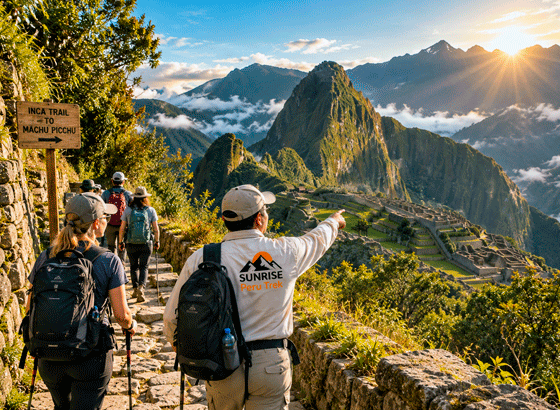
INCA TRAIL TO MACHU PICCHU 4D / 3N
Your challenge – Your Machu Picchu moment.
Starting from US$780 per person
- Includes Inca Trail permit, Machu Picchu entrance, professional guide, meals, camping equipment, porters, transportation and train back to Cusco.
- Approx. 42 km / 26 miles
- Maximum altitude: approx. 4,215 m / 13,829 ft
- Difficulty: Challenging
- Starting point: Km 82
- Final destination: Machu Picchu
Hike the Legendary Inca Trail to Machu Picchu
Walk in the footsteps of the Incas on the Classic Inca Trail to Machu Picchu, a once-in-a-lifetime journey through ancient stone paths, spectacular Andean mountains, cloud forests, and extraordinary archaeological sites.
Over four days, you will cross high mountain passes, explore remarkable Inca ruins, walk through changing ecosystems, and finally reach Intipunku (the Sun Gate), where your first unforgettable view of Machu Picchu awaits.
With Sunrise Peru Trek, a local Cusco-based team with more than 25 years of experience in Peru travel organizes your journey with professional guides and handles the details, so you can focus on what matters most: enjoying the trail.
WHY HIKE THE CLASSIC INCA TRAIL?
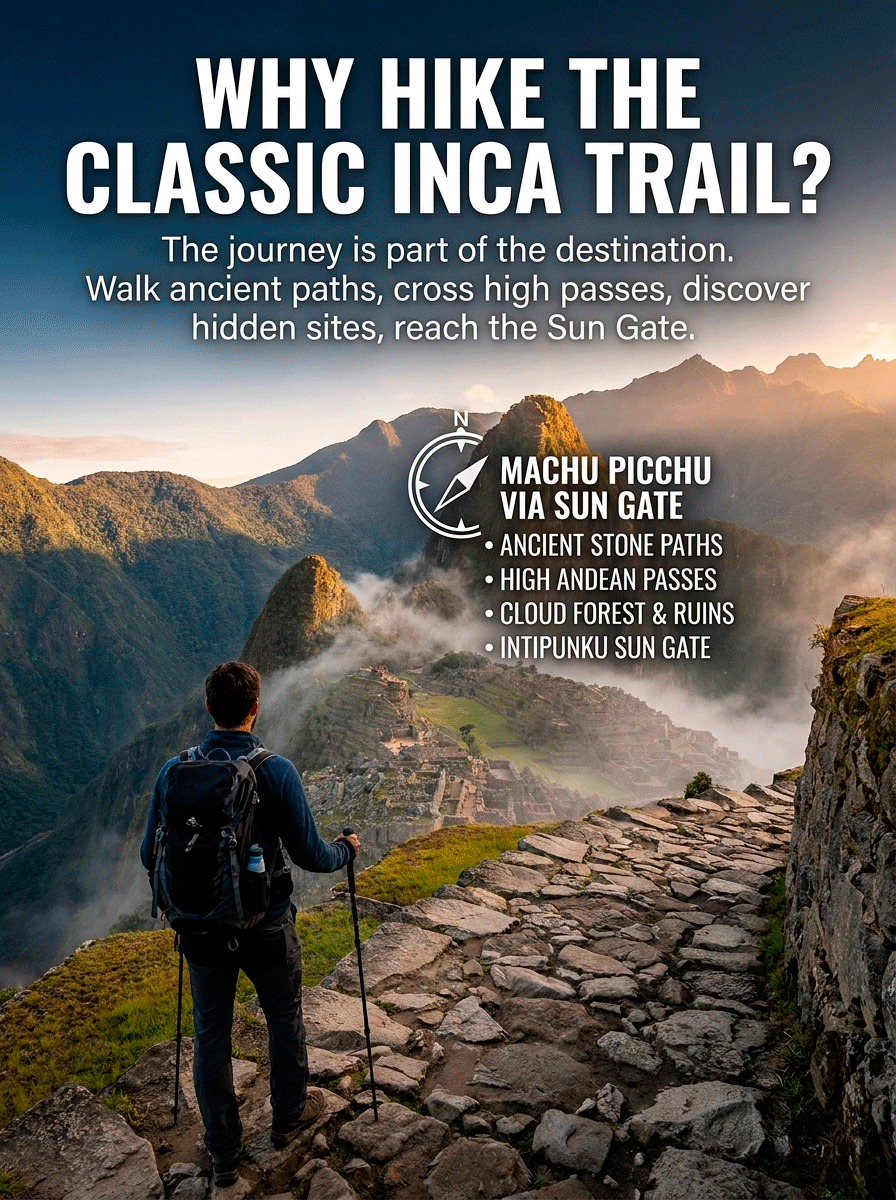 There are many ways to reach Machu Picchu.
But there is only one experience quite like walking the ancient Classic Inca Trail and entering the sanctuary through the historic Sun Gate.
This is not simply transportation to Machu Picchu. It is a journey through the landscapes, history, and archaeological heritage of the Inca civilization.
Along the trail, you will:
- Walk on ancient Inca stone paths.
- Cross high Andean mountain passes.
- Experience dramatic changes in climate and vegetation.
- Discover archaeological sites hidden in the mountains.
- Hike through highland landscapes and cloud forest.
- Visit spectacular sites such as Runkurakay, Sayacmarca, Phuyupatamarca and Wiñay Wayna.
- Reach Machu Picchu through Intipunku, the Sun Gate.
- Celebrate the completion of one of the world’s most famous treks.
The journey is part of the destination….
YOUR INCA TRAIL ADVENTURE: WHAT YOU NEED TO KNOW
Overview
INCA TRAIL INFORMATION
- 4 Days / 3 Nights
- Approximately 42–45 km / 26–28 miles
- Maximum elevation: 4,215 m / 13,828 ft
- Moderate to challenging
- Camping in designated campsites
- Professional local English-speaking guides
- Porter support
- Freshly prepared meals
- Inca Trail and Machu Picchu permits included
- Train and transportation included
WHAT MAKES THIS INCA TRAIL EXPERIENCE SPECIAL?
 A Truly Immersive Journey
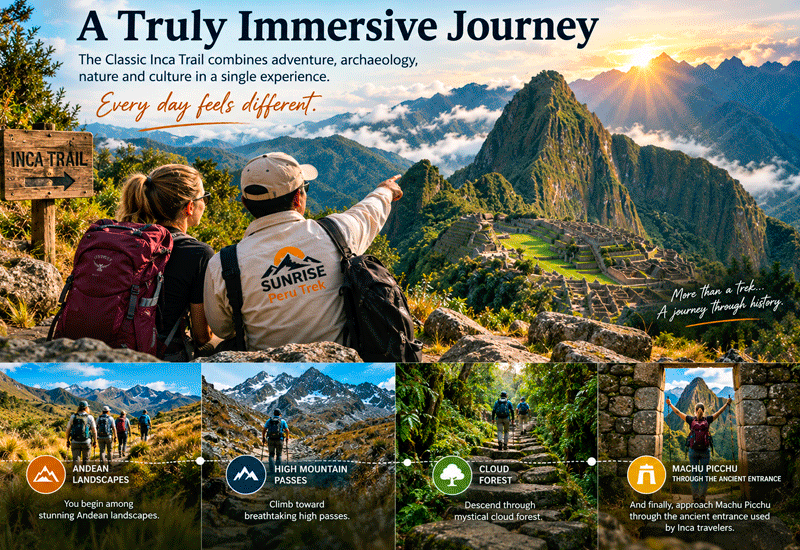
The Classic Inca Trail combines adventure, archaeology, nature, and culture in a single experience.
Every day feels different.
You begin among Andean landscapes, climb toward high mountain passes, descend through cloud forest, and eventually approach Machu Picchu through the ancient entrance used by Inca travelers.
Arrive at Machu Picchu Through the Sun Gate
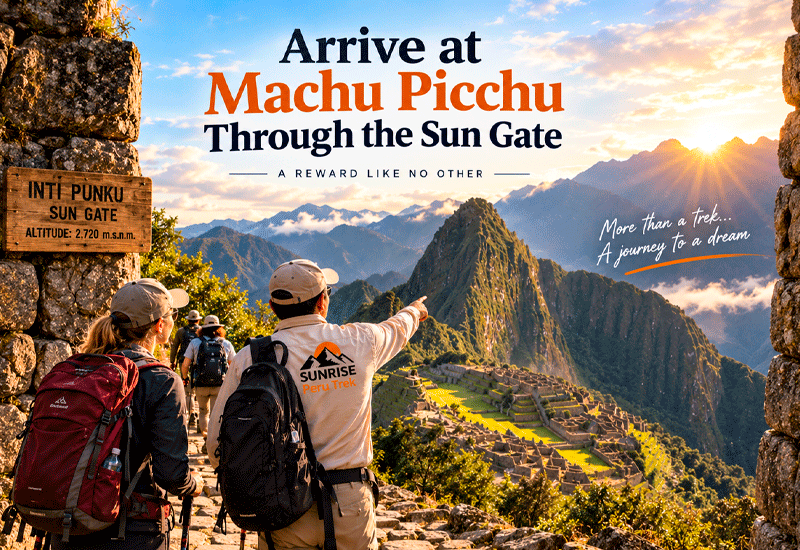
One of the most memorable moments of the trek comes on Day 4.
After several days of hiking, you walk toward Intipunku (Sun Gate) and gradually see Machu Picchu appear below you.
It is not simply seeing Machu Picchu.
It is arriving there on foot.
Travel With a Local Cusco Team
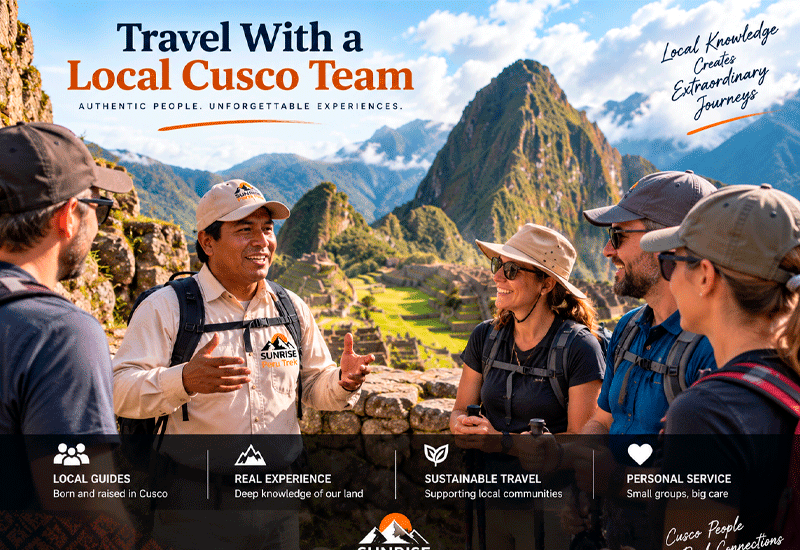
Sunrise Peru Trek is a locally owned and Cusco-based tour operator specializing in Peru trekking and Machu Picchu experiences.
Our team knows the region, the trail, and the logistics involved in making a multi-day trek run smoothly.
We are here before your trek, during your adventure, and when you return to Cusco.
Highlights
INCA TRAIL HIGHLIGHTS
Discover the Highlights of the Classic Inca Trail to Machu Picchu
The Classic Inca Trail to Machu Picchu is much more than a four-day hike. It is a journey through ancient Inca history, dramatic mountain landscapes, cloud forests, and some of the most remarkable archaeological sites in the Andes.
Unlike routes that take you directly to Machu Picchu by train, the Classic Inca Trail allows you to experience the journey itself as part of the adventure. Along the way, you will walk on ancient stone paths, climb high mountain passes, explore hidden Inca settlements, and gradually make your way toward Intipunku, the Sun Gate—the historic entrance from which Machu Picchu comes into view.
From Km 82 to Machu Picchu, every section of the trail reveals something different.
What Makes the Inca Trail Special?
The Classic Inca Trail brings together adventure, archaeology, nature, and culture in one unforgettable experience.
As you hike from the Sacred Valley toward Machu Picchu, the landscape changes from dry Andean valleys to high mountain environments and finally to lush cloud forest. Along the route, you encounter important archaeological sites including Patallacta, Runkurakay, Sayacmarca, Phuyupatamarca, Wiñay Wayna, and Intipunku.
You are not simply hiking to Machu Picchu.
You are following an ancient route through the heart of the Inca world.

01 — KM 82
The Starting Point of Your Inca Trail Adventure
Your Classic Inca Trail journey begins at Km 82, in the area of Piskacucho, the traditional starting point of the four-day route.
After leaving Cusco and traveling through the Sacred Valley, you begin walking along the ancient Inca road toward Machu Picchu.
This first section introduces you to the landscapes that will define the next four days: Andean mountains, agricultural valleys, rivers, and traditional communities.
Why it matters:
This is where your journey from Cusco to Machu Picchu truly begins.
02 — PATALLACTA
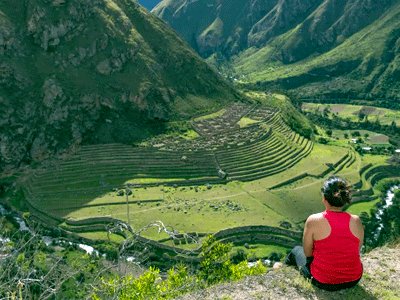 02 — PATALLACTA
Your First Major Inca Archaeological Site
One of the first major archaeological sites along the Classic Inca Trail, Patallacta is an impressive complex of terraces, structures, and agricultural areas dramatically positioned above the Urubamba River valley.
The site provides an early glimpse into the sophisticated planning and engineering of the Inca civilization.
Your guide will help you understand how this ancient settlement connected with the surrounding agricultural landscape and the wider Inca road network.
Don’t just walk past it—stop, look, and imagine what this place was like centuries ago.
03 — WAYLLABAMBA
The Gateway to the High Mountains
As the trail continues from the Sacred Valley toward the mountains, you reach Wayllabamba, an important section of the route and the gateway to the higher elevations of the Classic Inca Trail.
From here, the trail begins its demanding ascent toward Dead Woman’s Pass.
The landscape gradually changes as you leave the lower valleys behind and enter a higher mountain environment.
This is where the challenge begins.
04 — DEAD WOMAN’S PASS
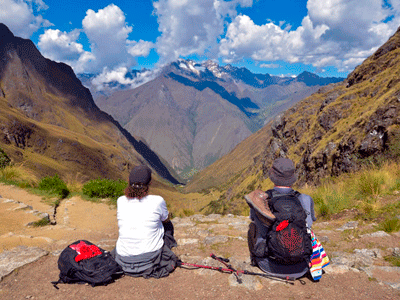 04 — DEAD WOMAN’S PASS
Warmiwañusca – The Highest Point of the Trek
At approximately 4,200–4,215 m / 13,780–13,829 ft, Dead Woman’s Pass (Warmiwañusca) is the highest point of the Classic Inca Trail.
The climb is challenging, with long stretches of stone steps and high-altitude terrain.
But reaching the summit is one of the defining moments of the entire trek.
Take a breath.
Look around.
You have just conquered the highest point of your journey.
From here, the trail descends toward the Pacaymayo Valley.
The hardest climb becomes one of your proudest memories.
05 — PACAYMAYO VALLEY
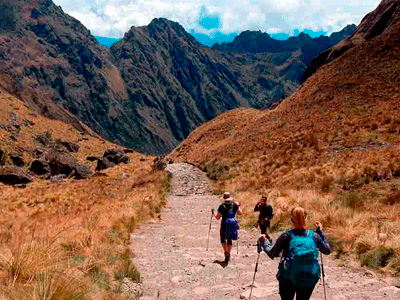 05 — PACAYMAYO VALLEY
A Mountain Valley After the Pass
After crossing Dead Woman’s Pass, the trail descends toward the Pacaymayo Valley, surrounded by steep Andean mountains and changing vegetation.
For many trekkers, reaching this valley feels like a major milestone after the demanding ascent.
It is a place to rest, recover, and appreciate how dramatically the landscape has changed.
From high mountain passes to hidden valleys, the Inca Trail is constantly transforming.
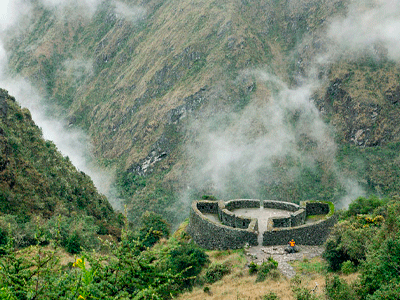
06 — RUNKURAKAY
An Ancient Inca Way Station
Continuing along the trail, you reach Runkurakay, a distinctive circular Inca archaeological structure built into the mountainside.
Its strategic position overlooking the surrounding landscape makes it one of the most fascinating sites along the route.
Your guide will explain the role this type of structure may have played within the Inca road system.
Standing among the ancient stones, it is easy to understand why this section of the trail feels like walking through history.
07 — SAYACMARCA
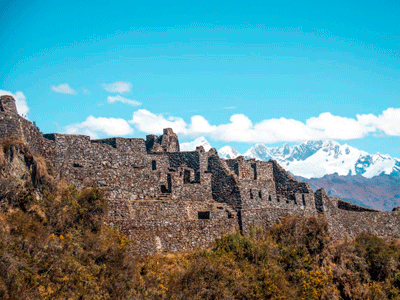 07 — SAYACMARCA
The Inca Settlement Above the Valley
Sayacmarca is an impressive archaeological complex dramatically built into a steep mountainside.
Its terraces, stone structures, and strategic location reveal the remarkable ability of the Incas to adapt their architecture to the rugged Andean landscape.
Reaching Sayacmarca also marks an important transition in the journey as the trail continues through increasingly lush mountain environments.
Ancient architecture. Dramatic mountains. One unforgettable trail.
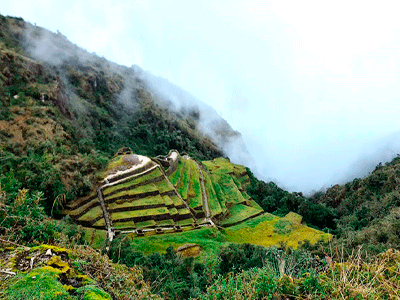
08 — PHUYUPATAMARCA
The “City Above the Clouds”
The name Phuyupatamarca is commonly translated as “City Above the Clouds,” an appropriate name for an archaeological site perched high in the Andes.
The site features terraces, stone structures, and water channels surrounded by spectacular mountain scenery.
On clear days, the views are extraordinary.
On cloudy days, mist can transform the ruins into an almost mystical landscape.
This is one of the places where the Inca Trail feels truly otherworldly.
09 — WIÑAY WAYNA
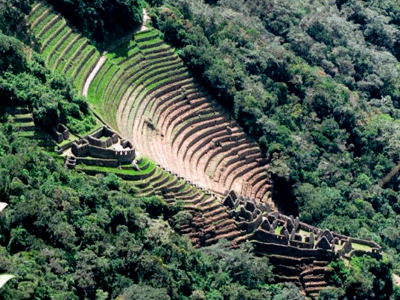 09 — WIÑAY WAYNA
One of the Most Spectacular Sites on the Inca Trail
Wiñay Wayna is one of the most remarkable archaeological sites along the Classic Inca Trail.
Its beautifully constructed agricultural terraces, stone buildings, and water channels are integrated dramatically into the mountainside.
The surrounding cloud forest adds another layer to the experience, with lush vegetation and a completely different atmosphere from the high-altitude sections of the trail.
For many trekkers, Wiñay Wayna becomes one of the highlights of the entire journey.
After three days of hiking, you are now very close to Machu Picchu.
10 — INTIPATA
Terraces Above the Sacred Valley
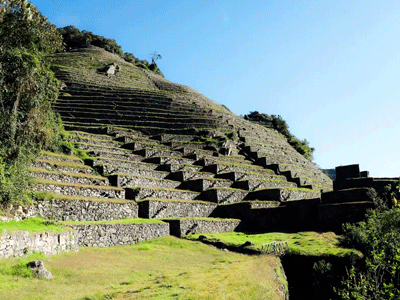
Depending on the authorized route and itinerary, trekkers may also encounter Intipata, an impressive series of agricultural terraces built into the mountainside.
The terraces demonstrate the extraordinary agricultural engineering of the Inca civilization while providing spectacular views of the surrounding valleys and mountains.
Intipata is another reminder that the Inca Trail was not simply a road—it was part of a much larger cultural and agricultural landscape.
11 — INTIPUNKU – THE SUN GATE
Your First View of Machu Picchu
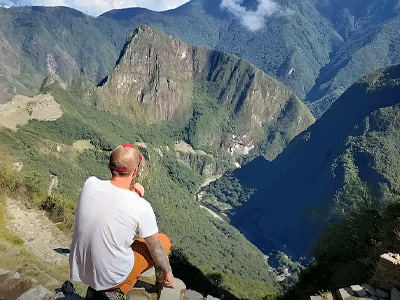
After days of hiking through the Andes, you finally approach Intipunku, the Sun Gate.
This is one of the most emotional moments of the Classic Inca Trail.
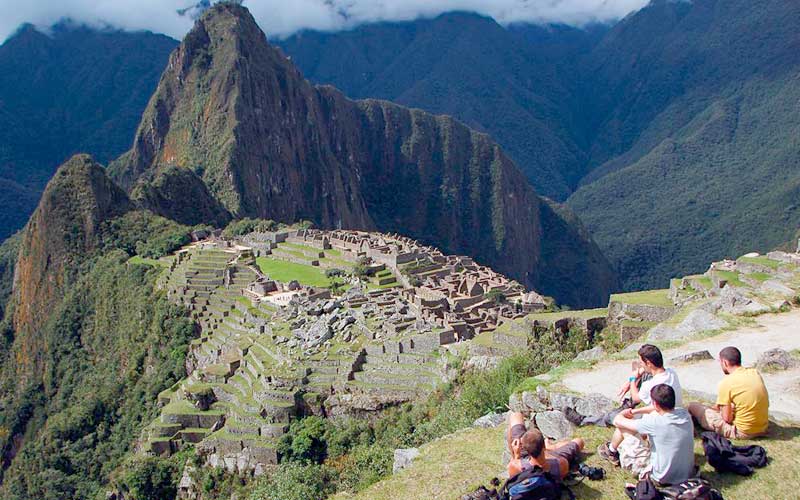
As you reach the viewpoint, the landscape opens, and Machu Picchu appears below you.
For trekkers arriving on the Classic Inca Trail, Intipunku represents the historic final approach to the sanctuary.
Take your time.
Enjoy the view.
Take photographs.
And appreciate what it took to get here.
You didn’t simply arrive at Machu Picchu.
You walked there.

12 — MACHU PICCHU
The Destination at the End of the Journey
The final destination is Machu Picchu, one of the world’s most extraordinary archaeological sites and the unforgettable conclusion to your four-day adventure.
After experiencing the mountains, archaeological sites, and cloud forests of the Inca Trail, entering the Machu Picchu sanctuary gives the journey an entirely different meaning.
Your professional guide will accompany you during your visit and explain the history, architecture, and significance of this extraordinary Inca site according to your authorized visitor route.
The moment you finally stand before Machu Picchu is the culmination of every step you have taken since Km 82.
FROM KM 82 TO MACHU PICCHU
One trail. Four days. Centuries of history.
KM 82
Your journey begins.
↓
PATALLACTA
Your first major archaeological discovery.
↓
WAYLLABAMBA
The climb toward the high mountains begins.
↓
DEAD WOMAN’S PASS
Reach approximately 4,200–4,215 m.
↓
PACAYMAYO
Descend into a spectacular mountain valley.
↓
RUNKURAKAY
Discover an ancient Inca structure.
↓
SAYACMARCA
Explore an Inca settlement built into the mountainside.
↓
PHUYUPATAMARCA
Walk through the “City Above the Clouds.”
↓
WIÑAY WAYNA
Discover one of the trail’s most impressive archaeological complexes.
↓
INTIPUNKU
Reach the Sun Gate.
↓
MACHU PICCHU
The journey you’ve been waiting for.
MORE THAN A HIKE
The Classic Inca Trail is not defined only by distance, altitude, or difficulty.
It is defined by the experience.
You wake up surrounded by mountains.
You walk ancient stone paths.
You discover archaeological sites hidden in the cloud forest.
You cross high mountain passes.
You learn about the civilization that built this extraordinary network of roads.
And finally, you reach Machu Picchu on foot.
This is why the Classic Inca Trail remains one of the world’s great trekking experiences.
Walk the trail. Discover the history. Arrive at Machu Picchu the Inca way.
Full Itinerary
YOUR 4-DAY INCA TRAIL ITINERARY
DAY 1: CUSCO – KM 82 – WAYLLABAMBA
The adventure begins
Your Inca Trail adventure begins early in the morning with pickup from your hotel in Cusco.
We travel by private transportation toward Km 82, the official starting point of the Classic Inca Trail.
After meeting the trekking team and completing the necessary registration, we begin walking along the ancient Inca path.
The first day introduces you to the spectacular landscapes of the Sacred Valley. You will walk through small Andean communities, agricultural fields, and mountain scenery while gradually getting accustomed to the rhythm of the trail.
Along the way, your guide will introduce you to the history and significance of the Inca Trail and the archaeological sites surrounding it.
By afternoon, we reach our first campsite.
Enjoy a freshly prepared dinner before resting for the night.
Trekking information
- Distance: approximately 10–12 km / 6–7.5 miles
- Walking time: approximately 5–7 hours
- Difficulty: Moderate
- Meals: Breakfast, lunch, and dinner
- Accommodation: Camping
- Maximum altitude: approximately 3,000 m / 9,840 ft

DAY 2: WAYLLABAMBA – DEAD WOMAN’S PASS – PACAYMAYO
The most challenging day
Today is considered the most demanding day of the Classic Inca Trail.
After breakfast, we begin our ascent toward Warmiwañusca, better known as Dead Woman’s Pass.
The trail climbs steadily through high-altitude landscapes until we reach the highest point of the trek at approximately 4,215 m / 13,829 ft.
The climb requires patience and a steady pace.
Your guide will help you find a comfortable rhythm, take appropriate breaks, and stay hydrated.
When you reach the pass, take a moment to appreciate what you have accomplished.
From the summit, we descend toward the Pacaymayo Valley.
Although the descent can be hard on the legs, the change in landscape is remarkable.
After reaching camp, enjoy a warm meal and a well-earned rest.
Trekking information
- Distance: approximately 10–12 km / 6–7.5 miles
- Walking time: approximately 7–9 hours
- Difficulty: Challenging
- Highest point: 4,215 m / 13,829 ft
- Meals: Breakfast, lunch and dinner
- Accommodation: Camping

DAY 3: PACAYMAYO – PHUYUPATAMARCA – WIÑAY WAYNA
Ancient ruins and cloud forest
After breakfast, we continue along one of the most spectacular sections of the Inca Trail.
We climb toward the second mountain pass before beginning a series of descents and ascents through a landscape filled with archaeological treasures.
Along the way, we explore sites including:
- Runkurakay
- Sayacmarca
- Phuyupatamarca
- Intipata
- Wiñay Wayna
The scenery changes dramatically as we move from high mountain environments toward the lush cloud forest.
In the afternoon, we reach Wiñay Wayna, one of the most spectacular archaeological sites on the trail.
Your guide will explain the history, architecture, and importance of this extraordinary Inca settlement.
Tonight is your final night on the trail.
Tomorrow, you will walk through the Sun Gate to Machu Picchu.
Trekking information
- Distance: approximately 10 km / 6.2 miles
- Walking time: approximately 5–7 hours
- Difficulty: Moderate to challenging
- Maximum altitude: approximately 3,680 m / 12,073 ft
- Meals: Breakfast, lunch and dinner
- Accommodation: Camping

DAY 4: WIÑAY WAYNA – SUN GATE – MACHU PICCHU
The moment you’ve been waiting for
Wake up early.
Today, your four-day journey reaches its most unforgettable moment.
After breakfast, we begin the final section of the Inca Trail toward Intipunku, the Sun Gate.
The trail gradually leads us toward the historic entrance overlooking Machu Picchu.
And then, after days of walking through the Andes, the landscape opens.
Machu Picchu appears below you.
Take time to enjoy the view, take photographs, and appreciate the journey that brought you here.
From the Sun Gate, we continue toward the Machu Picchu citadel.
Your guide will lead you through the permitted visitor route and explain the history, architecture, and significance of this extraordinary Inca sanctuary.
After your visit, we descend to Aguas Calientes by bus.
Enjoy some free time before boarding your return train.
From the train station, our team will assist you with your transportation back to Cusco.
Trekking information
- Distance: approximately 5–6 km / 3–4 miles
- Walking time: approximately 2–3 hours before/around Machu Picchu access
- Difficulty: Moderate
- Meals: Breakfast
- Destination: Machu Picchu – Aguas Calientes – Cusco
YOUR INCA TRAIL JOURNEY AT A GLANCE
| Day | Route | Distance | Difficulty |
|---|---|---|---|
| Day 1 | Km 82 – Wayllabamba | 10–12 km | Moderate |
| Day 2 | Wayllabamba – Dead Woman’s Pass – Pacaymayo | 10–12 km | Challenging |
| Day 3 | Pacaymayo – Phuyupatamarca – Wiñay Wayna | 10 km | Moderate/Challenging |
| Day 4 | Wiñay Wayna – Sun Gate – Machu Picchu | km Moderate |
ces, campsites, hiking times, and daily logistics may vary according to official trail regulations, campsite assignments, weather, and operational conditions.
Inclusions/Exclusions
WHAT’S INCLUDED?
EVERYTHING YOU NEED FOR THE TREK
Permits & Tickets
- Inca Trail permit
- Machu Picchu entrance ticket
- Guided Machu Picchu visit
- Government fees and booking fees
Professional Trekking Team
- Professional English-speaking guide
- Trekking cooks
- Porters
- Pre-trek briefing
- Trekking support throughout the route
Camping
- Four-season tents
- Sleeping mattress
- Dining tent
- Tables and chairs
- Kitchen equipment
- Camping equipment
- Duffel bag
Meals
- Breakfasts during the trek
- Lunches during the trek
- Dinners during the trek
- Snacks
- Afternoon tea
- Filtered drinking water
- Vegetarian and special dietary options with advance notice
Transportation
- Hotel pickup in Cusco
- Transportation to Km 82
- Bus from Machu Picchu to Aguas Calientes
- Expedition train
- Private transportation back to Cusco
Porter Service
Your personal duffel bag can be carried by our porter team, allowing you to hike with a lighter daypack.
Duffel allowance: up to 7 kg / 15 lbs per traveler.
WHAT’S NOT INCLUDED?
- Sleeping bag rental
- Inflatable mattress
- Trekking poles
- Personal expenses
- Travel insurance
- Tips for guides, cooks, and porters
- Meals not specifically listed in the itinerary
- Optional Huayna Picchu or Machu Picchu Mountain permits
Packing List
Inca Trail to Machu Picchu Packing List
Essential Documents
Original passport
Required to enter the Inca Trail and Machu Picchu. The passport must match the information used for your permit and ticket.
Valid student card
Bring it only if you booked with a student discount. It may be checked at the control points.
Travel insurance details
Recommended for trekking, medical support, trip delays, or emergencies during your journey.
Cash in Peruvian soles
Useful for snacks, drinks, souvenirs, bathrooms, and tips for guides, porters, and cooks.
Daypack Essentials
 Daypack Essentials
Small daypack, under 25L
Ideal for carrying daily essentials. Bags larger than 25L are not allowed inside Machu Picchu.
Water bottle or hydration bladder, 2–3 liters
Important for staying hydrated during the hike. Clean water is usually provided at meals after the first lunch.
Rain jacket or poncho
Weather changes quickly on the Inca Trail to Machu Picchu, so waterproof protection is essential.
Fleece jacket
Useful for chilly mornings, windy mountain passes, and cool afternoons.
Sun hat
Protects your face and neck from the strong Andean sun.
Sunglasses
Helps protect your eyes from sun glare, especially at high altitudes.
Sunscreen
High SPF sunscreen is recommended because UV rays are stronger in the Andes.
Insect repellent
Useful in cloud forest areas and near Machu Picchu, especially in warmer months.
Hand sanitizer
Helpful before meals and after using the trail bathrooms.
Toilet paper
Bring your own, as it is not always available along the route.
Small plastic bag for waste
Helps keep the trail clean and protects this historic route.
Camera or phone
Perfect for capturing landscapes, Inca ruins, and your arrival at Machu Picchu.
Power bank
There are no charging points during the trek, so bring enough battery power.
Personal medication
Carry any medicine you need during the day, including altitude or allergy medication.
Snacks
Energy bars, nuts, chocolate, or dried fruit are useful between meals.
Extra money
For personal purchases, drinks, souvenirs, and tips.
Earplugs
Helpful for sleeping better at camp.
Clothing for the Trek
2–3 quick-dry t-shirts
Lightweight shirts keep you comfortable and dry faster than cotton.
2–3 hiking pants
Comfortable, flexible pants are best for long walking days and changing weather.
4 sets of underwear
Enough for the full trek while keeping your packing light.
4 pairs of hiking socks
Good socks help prevent blisters and keep your feet dry.
Fleece jacket
A warm mid-layer for cold mornings and evenings.
Warm down jacket
Essential for cold nights at high-altitude campsites.
Waterproof rain jacket
Protects you from rain, wind, and cold weather.
Rain pants
Very useful during rainy days and muddy trail sections.
Sun hat
Important for daytime hiking under the strong sun.
Wool hat
Keeps you warm at night and during early morning starts.
Waterproof gloves
Recommended for cold, rainy, or windy conditions.
Comfortable camp shoes or sandals
Great for resting your feet after hiking.
Footwear
Hiking boots with a good grip
Choose comfortable, broken-in boots with strong soles and ankle support.
Camp shoes or sandals
Light shoes help your feet relax at the campsite.
Extra socks
Useful if your socks get wet or cold during the trek.

Duffel Bag Items
Sleeping bag rated to at least -10°C
Nights can be very cold, especially at higher campsites.
Air mattress
Adds comfort and insulation while sleeping in tents.
Extra clothing
Pack clean layers for camp and the following hiking days.
Warm layers
Important for cold evenings and early mornings.
Quick-dry towel
Useful for washing at camp and drying quickly.
Large plastic bags or dry bags
Help separate clean clothes, dirty clothes, and wet items.
Battery charger or power bank
Keep your phone, camera, or headlamp charged during the trek.
Important note: Porters usually carry up to 7 kg of personal items, including your sleeping bag and air mattress. Pack carefully and avoid unnecessary weight.
Toiletries
Toothbrush and toothpaste
Basic daily hygiene for the trek.
Wet wipes
Very useful for freshening up when showers are not available.
Toilet paper
Essential for trail bathrooms and campsite use.
Hand sanitizer
Keep your hands clean throughout the trek.
Sunscreen
Protects your skin from strong mountain sun.
Face moisturizer
Helps prevent dry skin caused by sun, wind, and altitude.
Insect repellent
Recommended for lower and warmer areas of the trail.
Biodegradable soap
Useful for washing hands and staying fresh at camp.
Personal medication
Bring enough for the full trek, plus extra in case of delays.
First Aid Items
Band-aids
Useful for small cuts, scratches, or minor foot irritation.
Blister plasters
Highly recommended for long hiking days.
Moleskin
Helps protect sensitive areas of the feet before blisters form.
Pain relievers
Useful for headaches, muscle pain, or minor discomfort.
Altitude medication
Bring it only if recommended by your doctor.
Stomach medicine
Helpful in case of digestive discomfort during the trip.
Prescription medication
Carry all personal prescriptions in your daypack or secure bag.
Useful Extras
Headlamp with extra batteries
Essential for nighttime at camp and early morning starts.
Trekking poles
Helpful for balance and reducing pressure on knees, especially downhill.
Reusable water bottle
Eco-friendly and practical for refilling during the trek.
Waterproof bags for electronics
Protects your phone, camera, passport, and batteries from rain.
Lightweight snacks
Adds extra energy during long hiking sections.
Camera
A great option for high-quality photos of landscapes and archaeological sites.
Phone
Useful for photos, music, and emergency contact before or after the trek.
What Not to Bring
Large suitcases
They are not practical for the Inca Trail and cannot be carried on the trek.
Heavy cotton clothing
Cotton dries slowly and can feel cold when wet.
Too many electronics
There is no electricity during the trek, and extra items add weight.
Unnecessary valuables
Leave expensive jewelry or non-essential items at your hotel.
Oversized backpack
Large bags are uncomfortable and not allowed inside Machu Picchu if over 25L.
Excess luggage
Respect the porter’s weight limit to keep the trek safe and organized.
Final Tip
Pack light, stay organized, and choose practical gear. With the right packing list, your Inca Trail to Machu Picchu experience will be more comfortable, safe, and enjoyable from the first step to the unforgettable arrival at Machu Picchu.
Price Info
Inca Trail to Machu Picchu Price
Best Value All-Inclusive Trek
Experience the legendary Inca Trail to Machu Picchu with one of the best-value tour packages in Peru. Our all-inclusive service covers permits, expert guides, porter support, camping equipment, meals, transportation, and your entrance to Machu Picchu—allowing you to enjoy a worry-free adventure from start to finish.
Tour Price
US$ 780 per person
- Based on double occupancy
- Minimum 2 travelers
- No hidden fees
Booking Information
- Deposit: US$ 200 per person
- Balance in Cusco: US$ 580 per person
Early booking is highly recommended, as Inca Trail permits are limited and sell out quickly.
Optional Add-Ons
- Huayna Picchu Permit: US$ 75
- Machu Picchu Mountain Permit: US$ 75
- Vistadome Train Upgrade: US$ 35
Equipment Rental
- Sleeping Bag: US$ 30
- Trekking Poles: US$ 20
- Inflatable Mattress: US$ 20
- Single Tent: US$ 30
Private Service
- 2 Travelers: US$ 1,150 pp
- 3 Travelers: US$ 950 pp
- 4 Travelers: US$ 850 pp
- 5 Travelers: US$ 780 pp
Essential Information
ESSENTIAL INFORMATION FOR YOUR INCA TRAIL ADVENTURE
HOW DIFFICULT IS THE 4-DAY INCA TRAIL?
Challenging, but achievable with preparation
You do not need to be a professional mountaineer to hike the Classic Inca Trail.
However, you should be prepared for:
- Long hiking days.
- Steep ascents and descents.
- Thousands of stone steps.
- High altitude.
- Uneven terrain.
- Rapid weather changes.
- Early mornings.
- Several consecutive days of physical activity.
The most demanding section is generally Day 2, when you climb toward Dead Woman’s Pass.
The key is not speed.
It is pacing yourself, staying hydrated, eating properly, and listening to your guide and your body.
Our recommendation
Begin preparing several weeks before your trek with:
- Walking and hiking.
- Stair climbing.
- Incline walking.
- Leg and core strengthening.
- Longer weekend hikes.
- Training with a light backpack.
INCA TRAIL ALTITUDE
Altitude is one of the most important factors to consider before hiking the Classic Inca Trail.
The trail reaches approximately:
4,215 m / 13,829 ft
at Dead Woman’s Pass.
Machu Picchu itself is much lower, at approximately:
2,430 m / 7,972 ft
Because altitude affects everyone differently, we recommend spending several days in Cusco or another high-altitude destination before beginning the trek.
Take the first days in Cusco slowly, stay hydrated, and allow your body time to acclimatize.
WHAT IS CAMPING LIKE ON THE INCA TRAIL?
Your nights are spent in established camping areas along the Classic Inca Trail.
Camping is part of what makes this experience special.
After a day of hiking, you can enjoy a hot dinner, look up at the Andean sky, and rest before the next day’s adventure.
Camping conditions are basic compared with a hotel.
There may be limited electricity and mobile phone coverage, and facilities are simple.
Your trekking team will organize the camping equipment, meals and camp logistics so you can concentrate on the trail.
FOOD ON THE INCA TRAIL
Good food matters when you are hiking for several days at high altitude.
Our trekking cooks prepare nourishing meals designed to provide the energy you need throughout the trek.
Meals generally include a combination of:
- Soups
- Rice
- Potatoes
- Pasta
- Vegetables
- Fresh ingredients
- Meat or alternative protein
- Fruit
- Hot drinks
- Snacks
Vegetarian, vegan, and other dietary requirements can usually be accommodated when requested in advance.
Please tell us about your dietary requirements when making your reservation.
YOUR INCA TRAIL TEAM
More than a guide – your local connection to Peru
The people who accompany you can make the difference between simply completing a trek and truly experiencing it.
Your Sunrise Peru Trek team may include:
Professional Local Guide
Your guide leads the group, manages the pace, explains the history and culture of the trail, and helps coordinate the trek from beginning to end.
Trekking Chef
Our trekking cooks prepare your meals at camp and help ensure that you have the energy you need for each day’s hike.
Porters
Porters help transport camping equipment, food, and permitted personal belongings along the trail.
They are an essential part of the trekking team.
Office & Operations Team
Before your trek, our Cusco office team coordinates permits, transportation, schedules, and other logistics.
If you have a question before or during your journey, you are never dealing with a distant company.
We are in Cusco, and we are here to help.
SAFETY ON THE INCA TRAIL
Your safety is our priority.
Our guides are responsible for monitoring the group throughout the trek and helping travelers respond to the challenges of altitude, weather, terrain, and fatigue.
We recommend that all travelers:
- Follow their guide’s instructions.
- Stay hydrated.
- Walk at a comfortable pace.
- Inform the guide immediately if they feel unwell.
- Carry personal medication.
- Follow official trail regulations.
- Respect the environment and archaeological sites.
Emergency procedures and evacuation arrangements are explained by your guide as part of the trekking operation.
INCA TRAIL PERMITS
Why should you book early?
The Classic Inca Trail is a regulated trekking route with limited availability.
For 2026, the Ministry of Culture opened advance sales for the Inca Trail and Machu Picchu from November 17, 2025, highlighting the importance of early planning and reservations.
Once permits for a particular date are sold out, we cannot simply create additional spaces.
Our advice:
If your travel dates are fixed, contact us as early as possible.
If your dates are flexible, tell us your preferred month, and we can help you identify the best available options.
Your passport information is required to process the permit.
MACHU PICCHU CIRCUITS FOR INCA TRAIL HIKERS
Machu Picchu operates with official circuits and routes established by the Peruvian Ministry of Culture.
The current system includes three main circuits and ten routes.
The route available to you depends on the official ticket assigned to your Inca Trail reservation and the regulations in effect for your travel date.
For this reason, we do not recommend promising a specific Machu Picchu circuit before the permit and entrance allocation are confirmed.
Your exact Machu Picchu route will be confirmed with your booking information.
This approach keeps your reservation accurate and avoids misleading promises about routes that are subject to official regulations and availability.
WHEN IS THE BEST TIME TO HIKE THE INCA TRAIL?
The Classic Inca Trail can be spectacular throughout the permitted trekking season.
Dry Season
Generally from approximately April to October.
You can expect:
- More stable weather.
- Cooler nights.
- Sunny days.
- Stronger sun at altitude.
- Beautiful mountain views.
Rainy Season
Generally from approximately November to March.
You may experience:
- Rain.
- Cloudier skies.
- Wet and slippery stone steps.
- Lush vegetation.
- Fewer hikers during some periods.
February Closure
The Classic Inca Trail is traditionally closed in February for annual maintenance.
Always confirm your preferred date with us before making non-refundable travel arrangements.
WHAT HAPPENS BEFORE THE TREK?
Your Pre-Trek Briefing
Before beginning the Classic Inca Trail, you will receive important information about your trek.
We review:
- Pickup time.
- Trekking route.
- Weather.
- Equipment.
- Porter arrangements.
- Meals.
- Baggage.
- Safety recommendations.
- Machu Picchu logistics.
- Return transportation.
This is also your opportunity to ask any last-minute questions.
WHAT HAPPENS AFTER MACHU PICCHU?
After completing your Machu Picchu visit, you will travel down to Aguas Calientes by bus.
You will then board your scheduled tourist train toward the Sacred Valley.
From the train station, our transportation will take you back toward Cusco according to your confirmed itinerary.
Our goal is simple:
You finish the trek, and we take care of the logistics.
WHY CHOOSE SUNRISE PERU TREK?
Your Local Team in Cusco
We are not a company operating from thousands of miles away.
We are based in Cusco, Peru.
Our team lives and works in the destination you are coming to explore.
More Than 25 Years of Experience
We have been creating Peru travel experiences since 1999.
Local Knowledge
Our team understands the region, the culture, the logistics, and the realities of traveling through the Andes.
Personal Service
We believe travelers should be treated as people, not reservation numbers.
Small Groups
We focus on a more personal trekking experience rather than simply moving large numbers of people along the trail.
Complete Logistics
From your pre-trek briefing to your transportation back to Cusco, our team coordinates the essential details of your adventure.
Responsible Travel
We respect the Inca Trail, the communities, the environment, and the archaeological heritage that make this journey possible.
WHO IS THE CLASSIC INCA TRAIL FOR?
The 4-Day Classic Inca Trail is ideal for travelers who:
- Want to experience Machu Picchu through an iconic hiking route.
- Enjoy adventure and outdoor experiences.
- Are comfortable walking several hours per day.
- Want to explore Inca archaeological sites.
- Are willing to camp for three nights.
- Want a deeper cultural experience.
- Are prepared to hike at high altitude.
- Want to arrive at Machu Picchu through the Sun Gate.
WHO SHOULD CONSIDER ANOTHER ROUTE?
The Classic Inca Trail may not be the best option if you:
- Do not enjoy camping.
- Have difficulty with long days of walking.
- Are not prepared for high altitude.
- Prefer a more relaxed Machu Picchu experience.
- Have limited time for trekking.
- Prefer a shorter hiking route.
If the Classic Inca Trail does not match your travel style, ask us about the Short Inca Trail, Salkantay Trek, or other Machu Picchu experiences.
FAQ
FREQUENTLY ASKED QUESTIONS
How long is the Classic Inca Trail?
The Classic Inca Trail is approximately 42 km / 26 miles, although the exact distance can vary depending on the route and operational conditions.
How difficult is the 4-Day Inca Trail?
It is considered a challenging trek because of the altitude, steep stone steps, and consecutive hiking days. Day 2 is generally the most demanding.
What is the highest point of the Inca Trail?
Dead Woman’s Pass reaches approximately 4,215 m / 13,829 ft.
Do I need previous trekking experience?
No professional trekking experience is required, but you should have a reasonable level of fitness and prepare before the trek.
Can children hike the Inca Trail?
There is no simple answer based only on age. Fitness, altitude tolerance, previous hiking experience, and the child’s ability to handle long trekking days should all be considered.
Contact us with the child’s age and hiking experience so we can provide appropriate advice.
Do I need to carry all my belongings?
No. Porter service is available according to your selected package and the applicable regulations. You normally carry only the items you need during the day.
Can I bring a suitcase?
You should not take a large suitcase onto the Inca Trail. We can explain the luggage-storage and porter arrangements available for your trip.
Are meals included?
Yes. Meals are included as outlined in the itinerary and your confirmed package.
We can accommodate vegetarian and special dietary requirements with advance notice.
Is drinking water provided?
Water arrangements depend on the trekking operation and itinerary. We recommend bringing a reusable water bottle or hydration system and following your guide’s instructions regarding safe drinking water.
Where do we sleep?
You sleep in tents at designated camping areas along the Inca Trail.
Can I take a shower?
Facilities along the trail are basic. Do not expect hotel-style bathrooms or showers.
Is there Wi-Fi on the Inca Trail?
No. Mobile and internet coverage can be limited or unavailable along sections of the trail.
This is a good opportunity to disconnect and enjoy the Andes.
When should I book the Inca Trail?
As early as possible, especially if your dates are fixed, or you plan to travel during popular months.
Inca Trail permits are limited and subject to official availability.
Can I choose my Machu Picchu circuit?
Machu Picchu circuits and routes are controlled by the Ministry of Culture. Your available route depends on the ticket associated with your reservation and the regulations in effect for your travel date.
We will provide the confirmed information available for your trek.
Does the trek include the train back to Cusco?
Yes, the standard package includes tourist train transportation according to your confirmed itinerary.
The exact train service and schedule are confirmed during the booking process.
What happens if the weather is bad?
Weather conditions in the Andes can change rapidly.
Your guide will make operational decisions based on trail conditions, safety, and official regulations.
The trek operates in variable weather conditions, so proper clothing and rain protection are essential.
What happens in an emergency?
Our guides are trained to respond to common trekking emergencies and will follow the appropriate emergency and evacuation procedures when necessary.
Travel insurance is strongly recommended.
Can I hike the Inca Trail if I have never been to high altitude?
Yes, but acclimatization is extremely important.
We recommend spending several days in Cusco or another high-altitude destination before starting the trek.
Making Inca Trail Booking:
Make sure your journey of a lifetime is off to an amazing start by booking our 4-day Inca Trail Trek Group/Private service! All you have to do is fill out our “INQUIRY NOW” form and provide us with your exact departure date, personal information (name, nationality, and passport number), and a trek deposit of US$200. You can easily pay this via PayPal, and the final balance will be due two days before trek departure when you arrive in Cusco. With us taking care of all the details, you can focus on preparing for an unforgettable experience! 
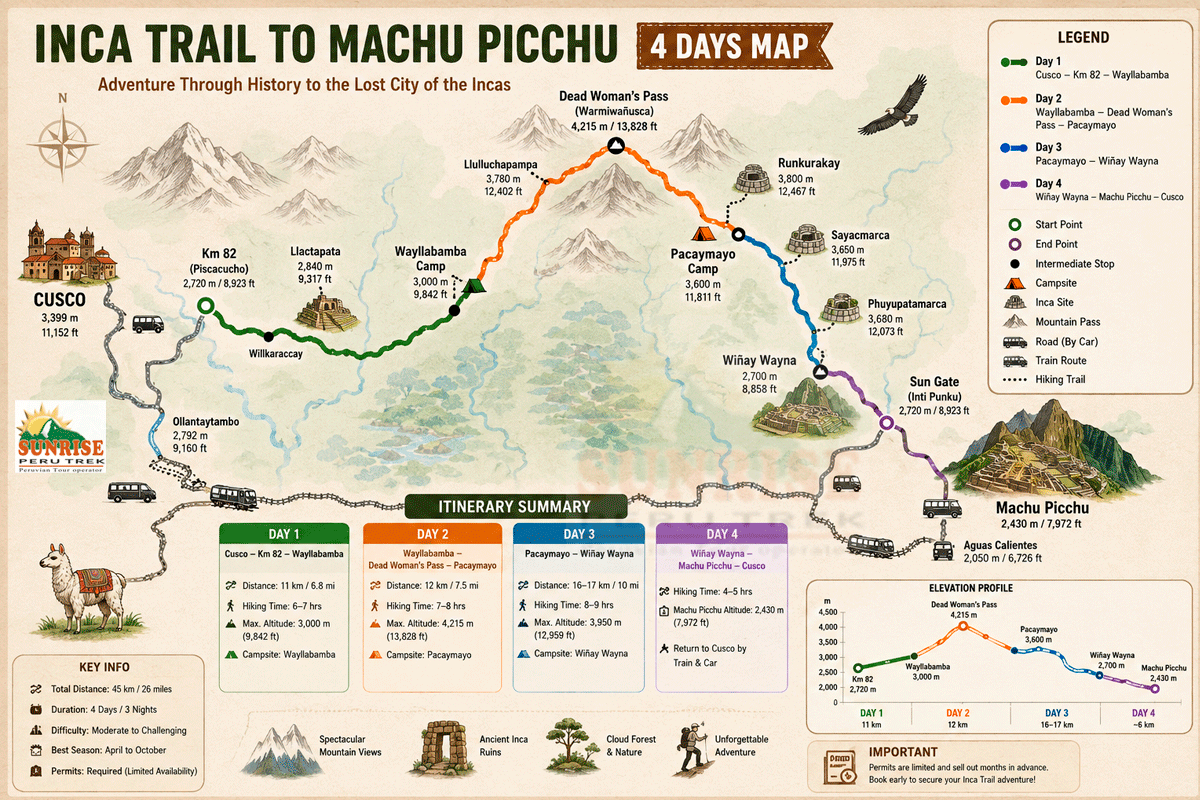
THE INCA TRAIL TO MACHU PICCHU MAP
The Inca Trail Trek Video
Important links
YOUR INCA TRAIL ADVENTURE STARTS WITH A PERMIT
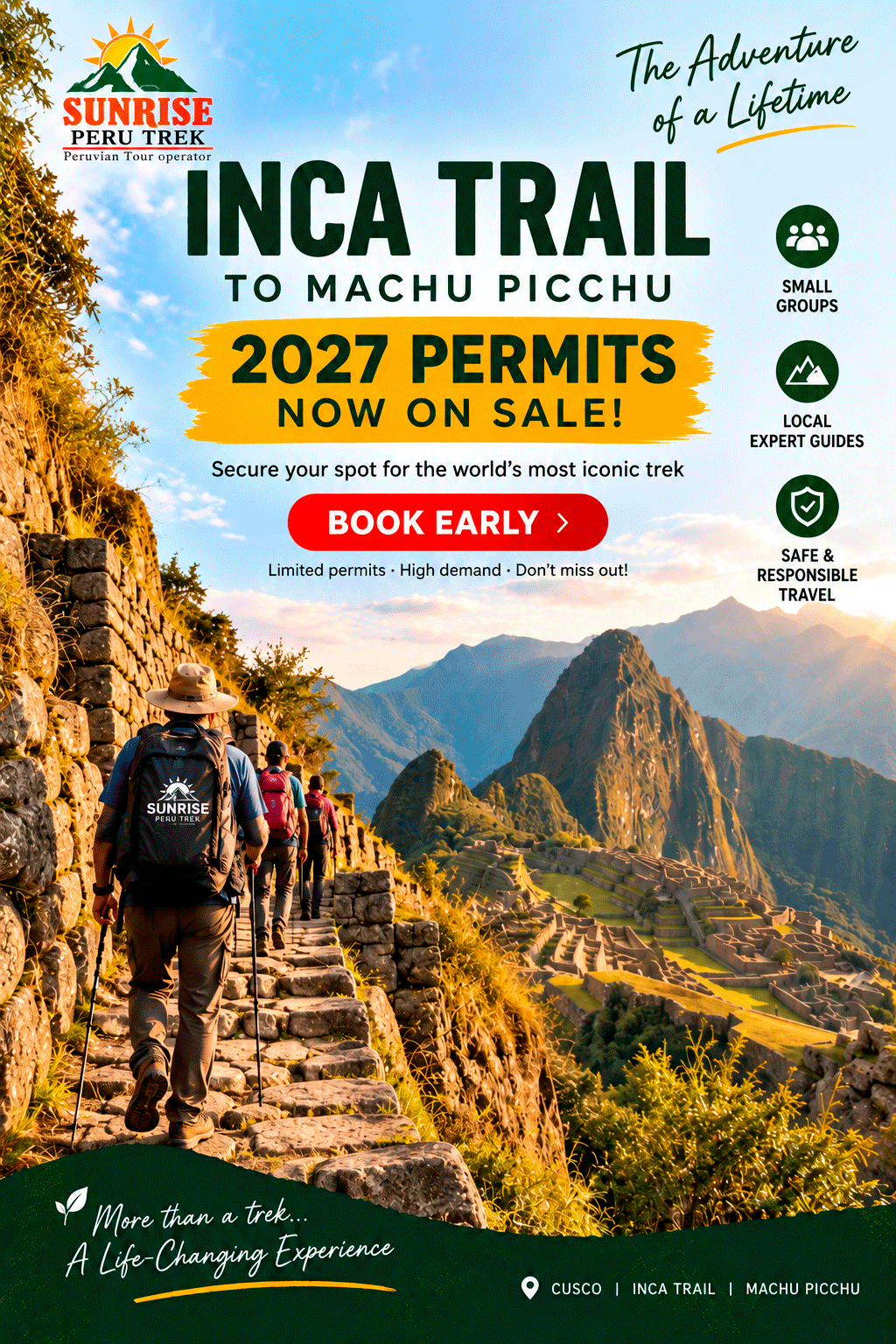
2027 permits are now available. Inca Trail permits are limited, and popular trekking dates can sell out months in advance.
Don’t wait until your preferred date is gone.
SECURE YOUR INCA TRAIL PERMIT →
Plan early. Trek the Inca Trail. Arrive at Machu Picchu through the Sun Gate.
Sunrise Peru Trek Travel & Tours offers safe, fast, and reliable payment methods to make booking your dream trip to Machu Picchu and Cusco simple and stress-free. We prioritize your security and convenience, so you can focus on planning your adventure with confidence. We accept PayPal, one of the world’s most trusted online payment platforms. Paying with PayPal is quick, secure, and easy, allowing you to book your tour in just a few clicks from anywhere in the world. Your financial information is protected with advanced encryption, giving you complete peace of mind.Secure Payment
Secure Payment Methods for Your Peru Tours
Easy & Secure Payments
Easy & Secure Payments with PayPal
